
Unveiling of the ‘Coastwatchers’ Statue, October 2026
Scroll down for more images at the bottom of the page
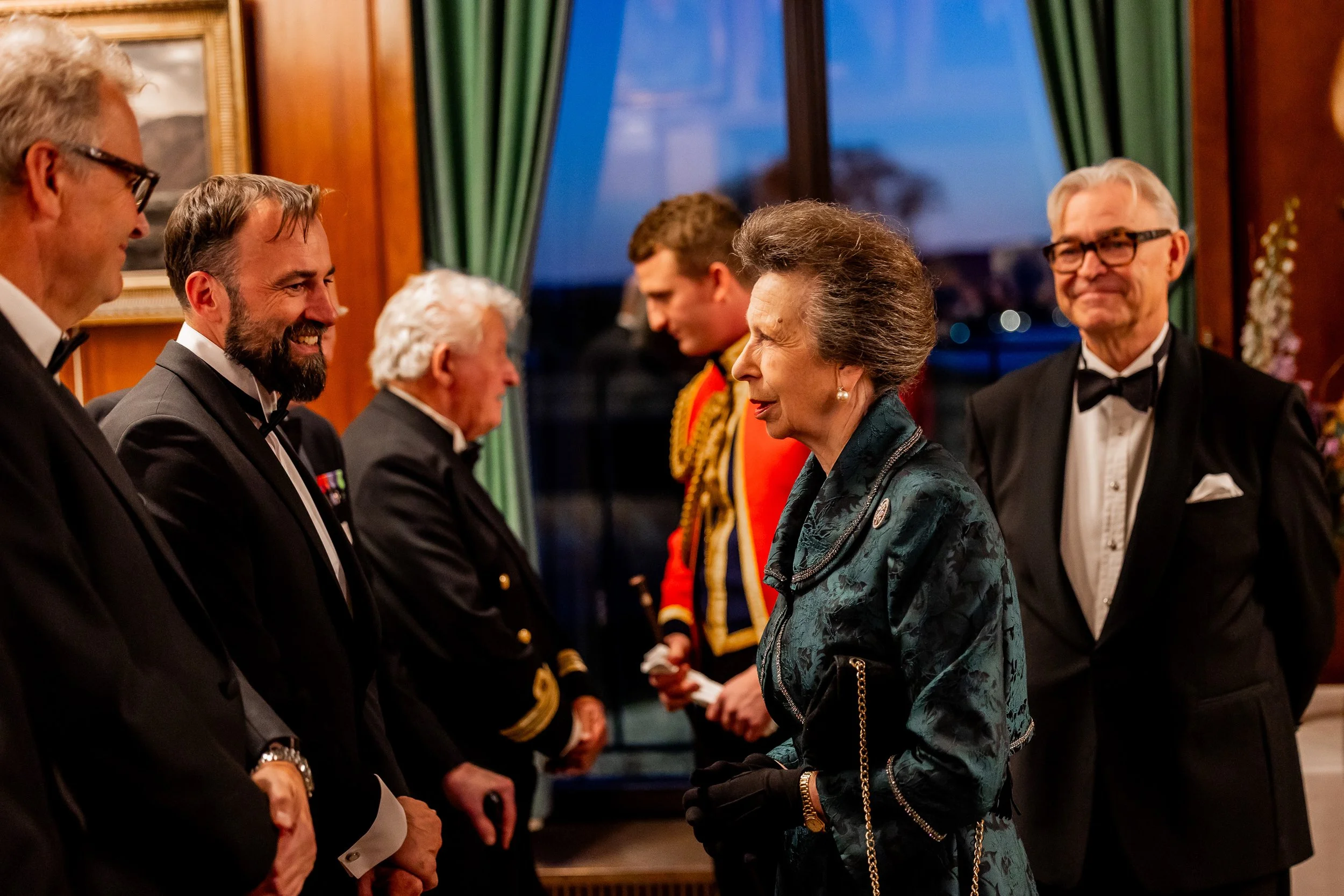
The Anglo-Norwegian Commemoration Project, of which Her Royal Highness, The Princess Royal, Princess Anne, became Patron in 2023, was established with the aim of increasing public awareness and recognition of the close cooperation between the Special Operations Executive (SOE) and the Secret Intelligence Service (SIS) and the many Norwegian patriots who worked with them, and the significant contribution which they made to achieving the liberation of Norway from German occupation.
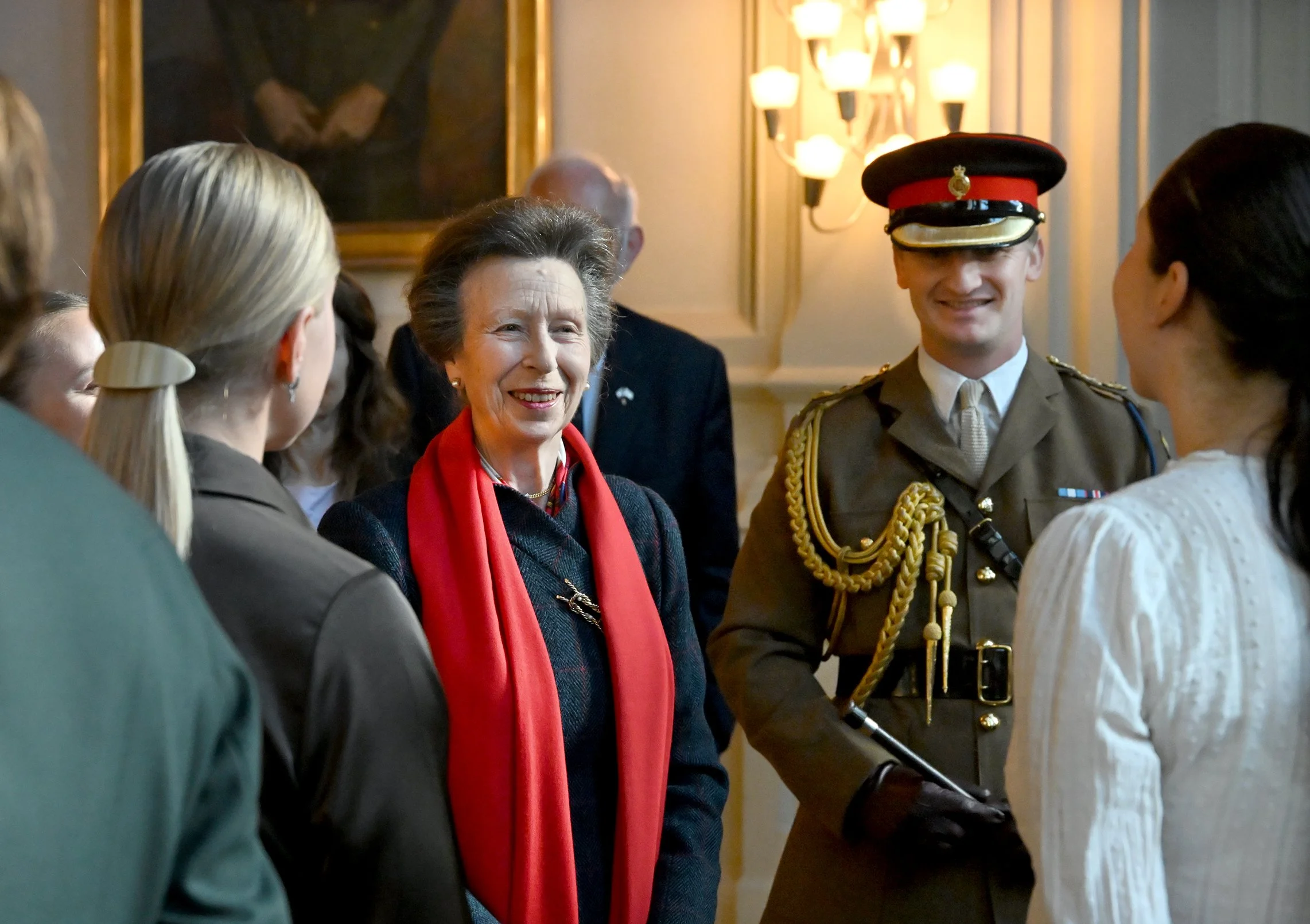
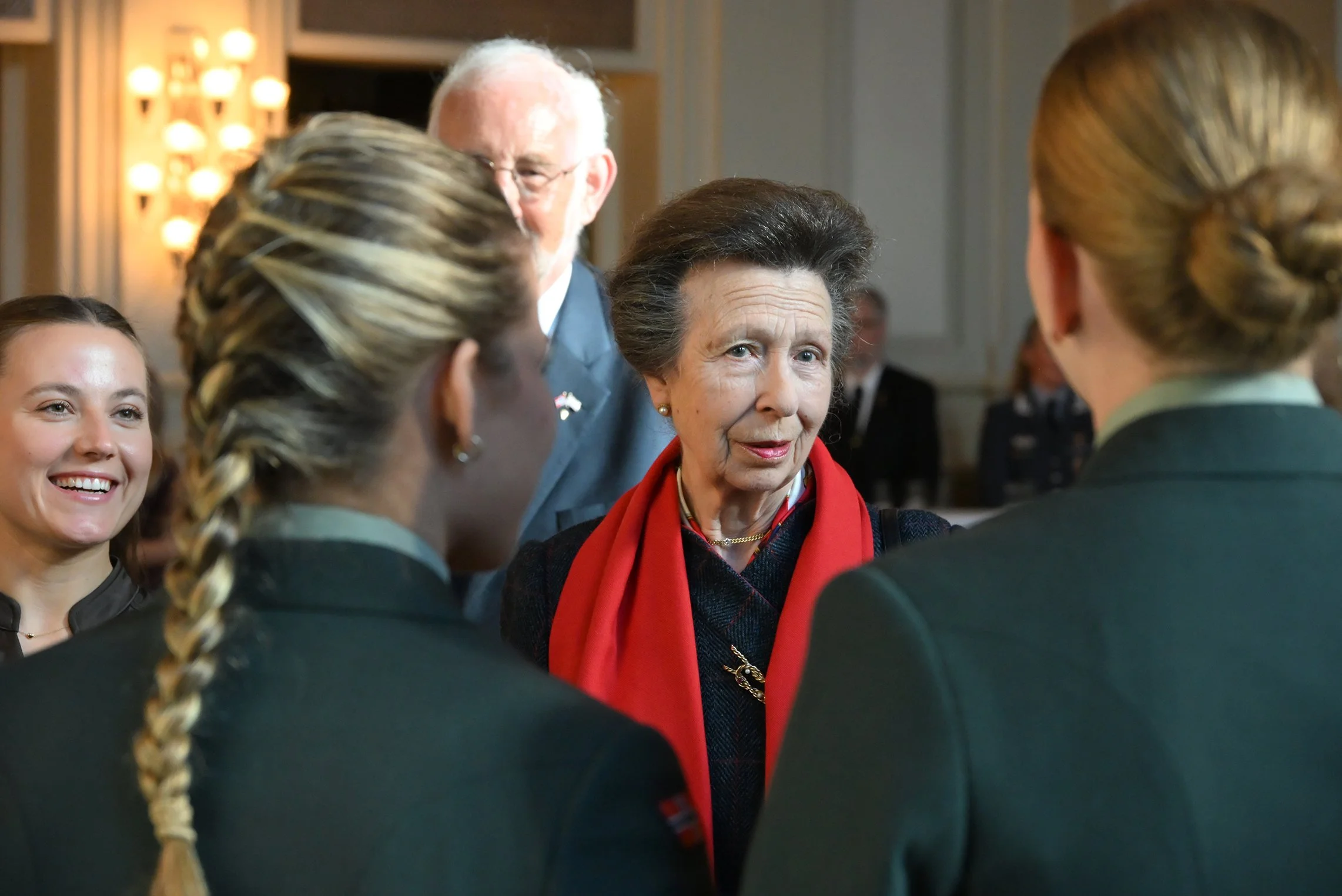
In her capacity as Patron of the Project, Her Royal Highness has already visited Norway once, in May 2024, when she went to Vemork, the site of the celebrated raid on the heavy water plant, Operation Gunnerside.
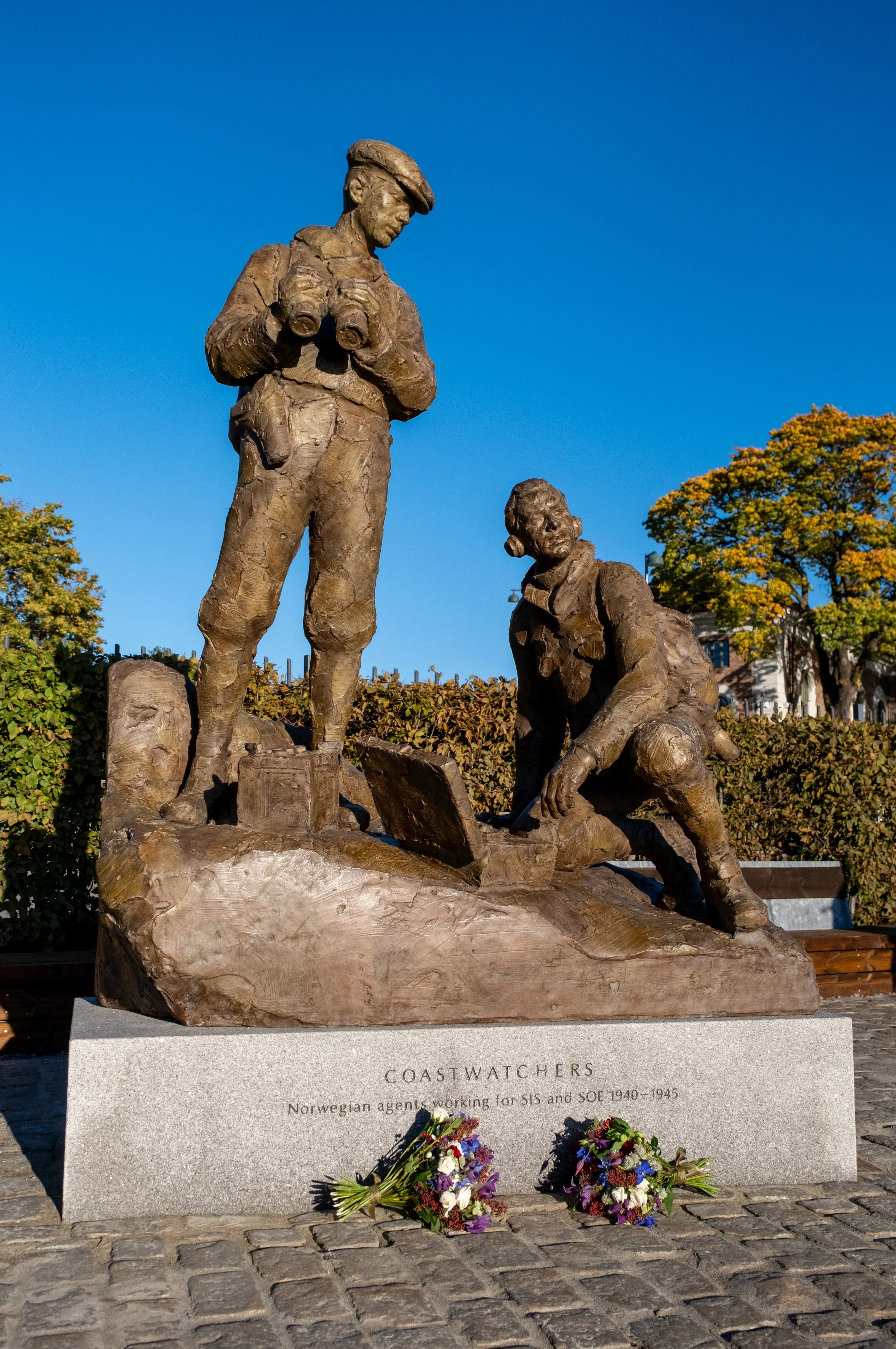
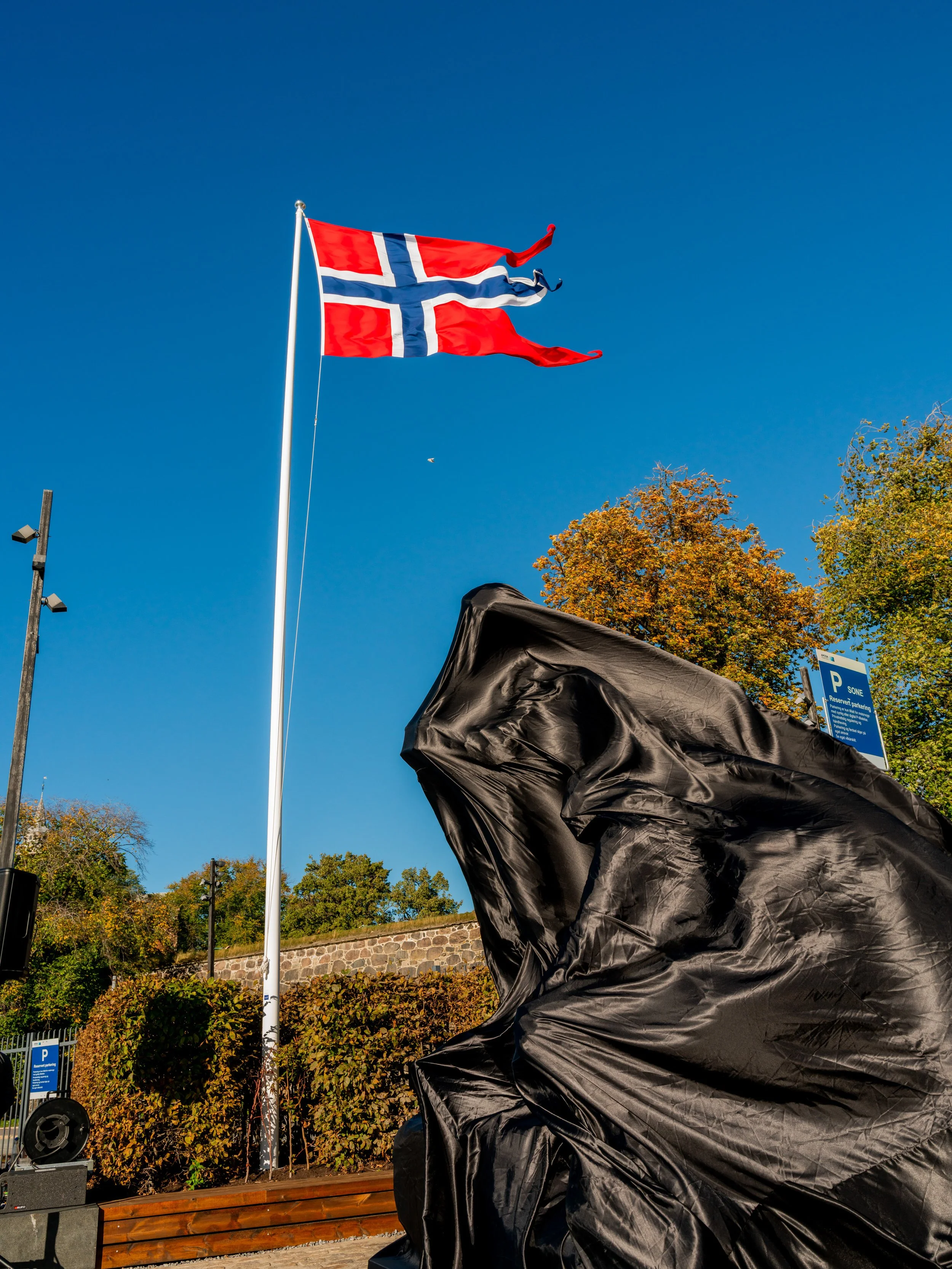
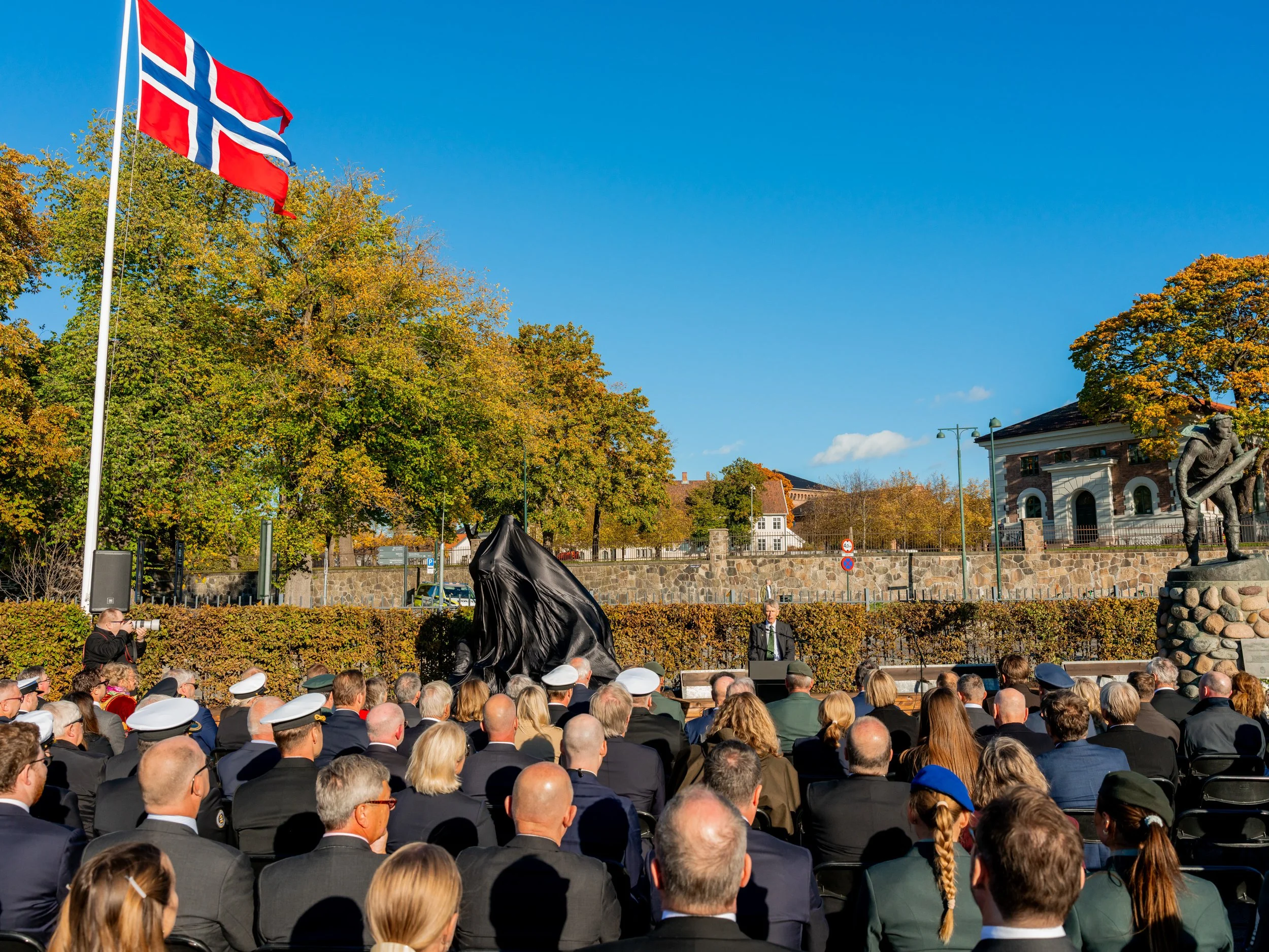
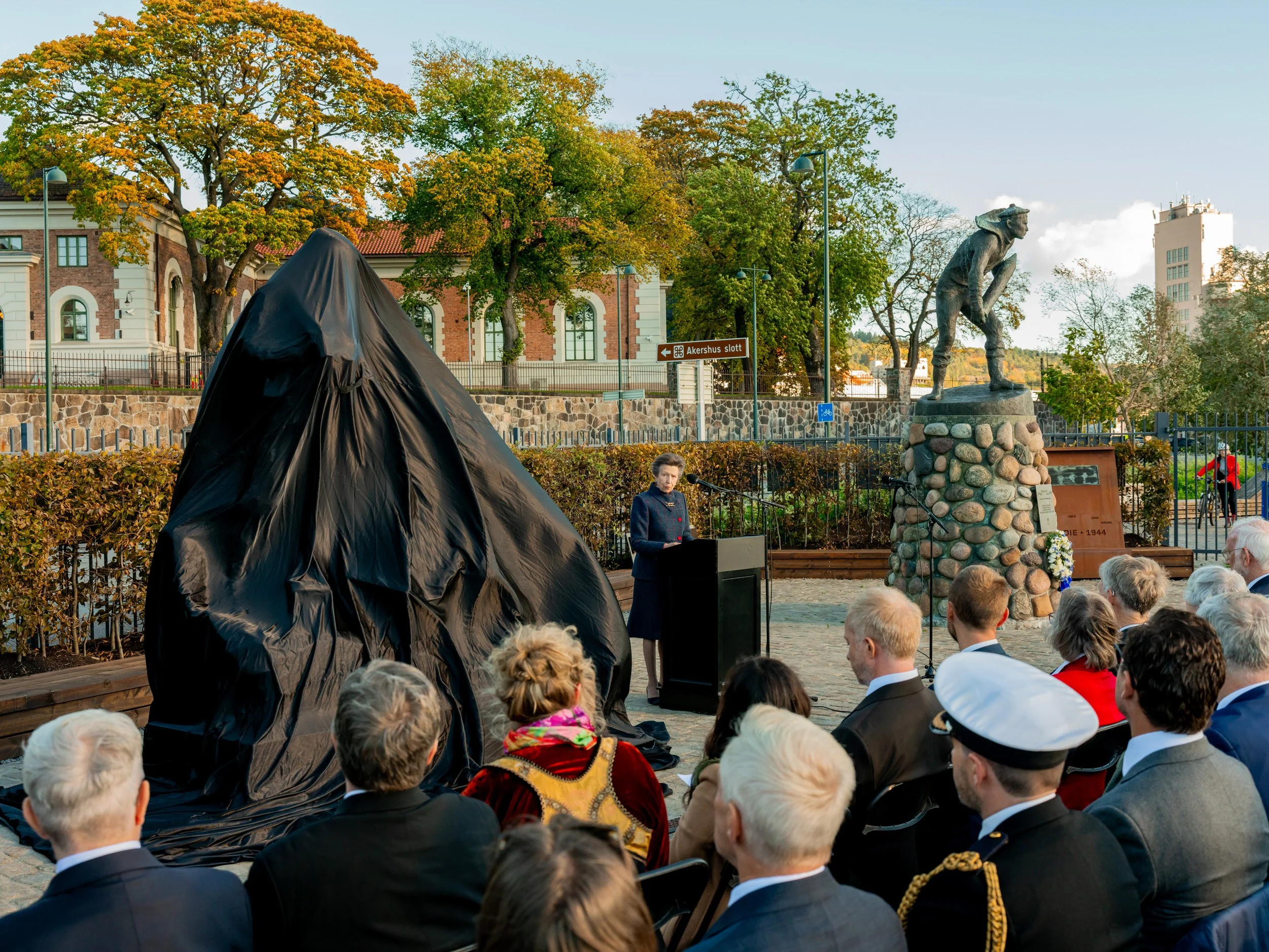
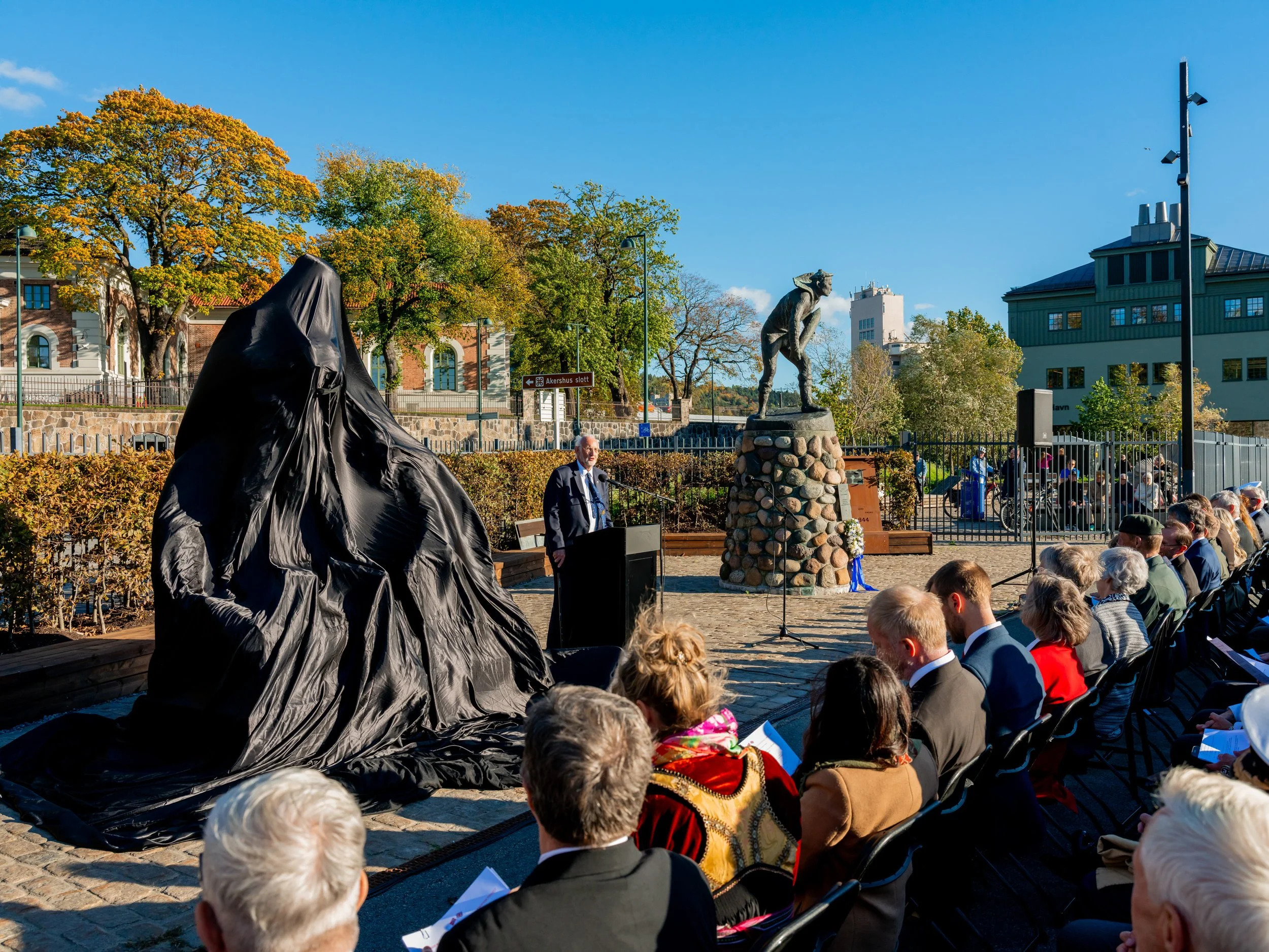
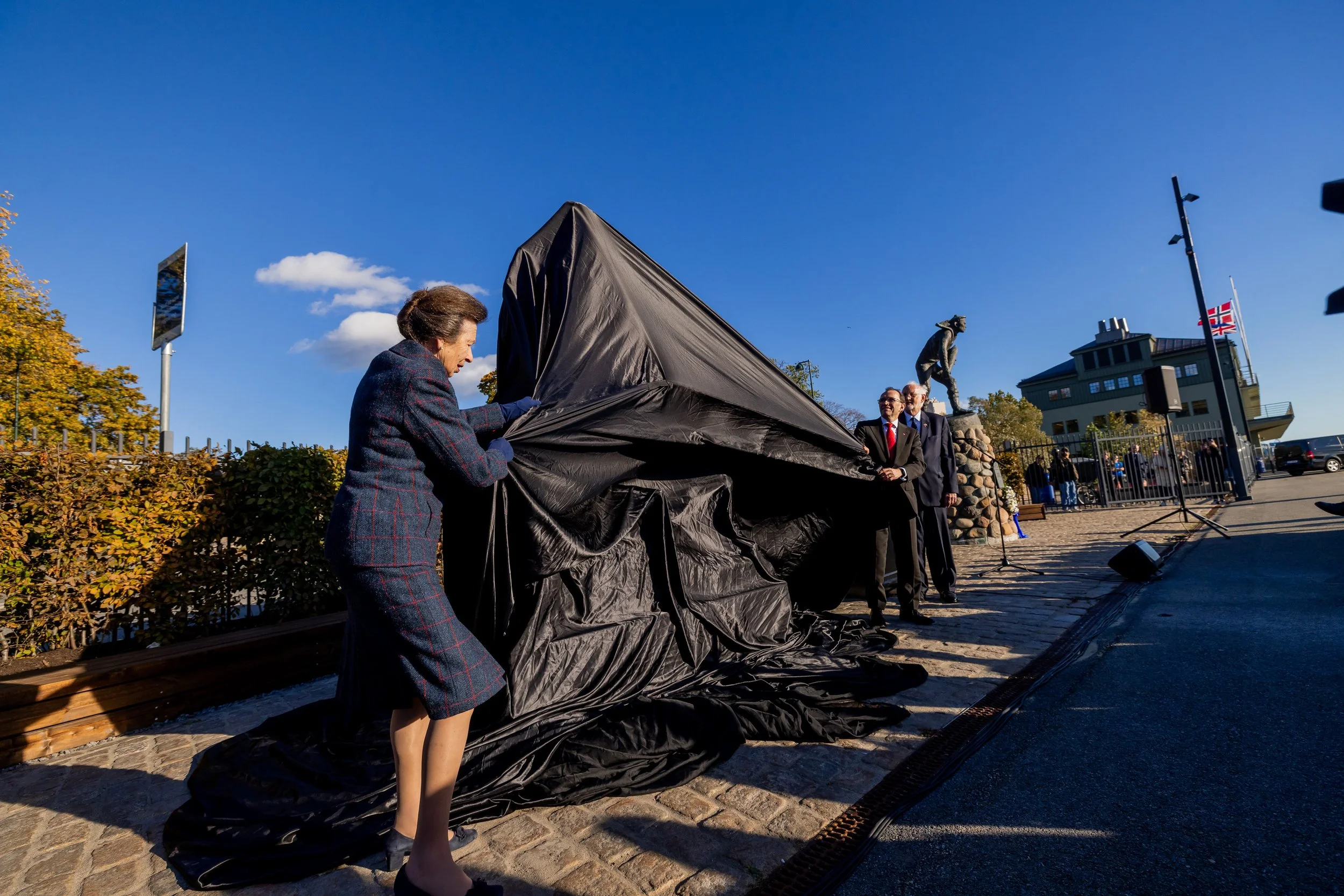
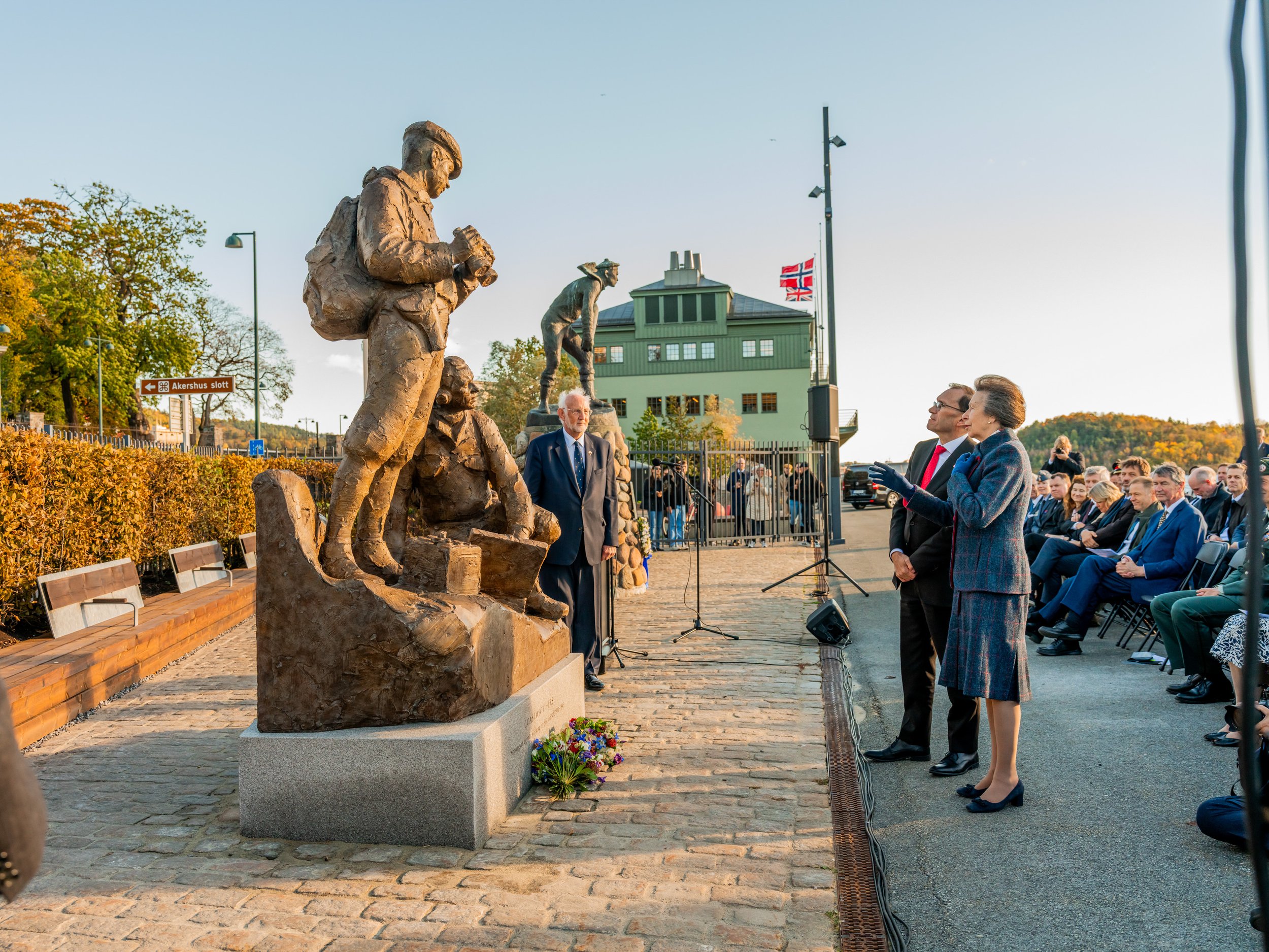
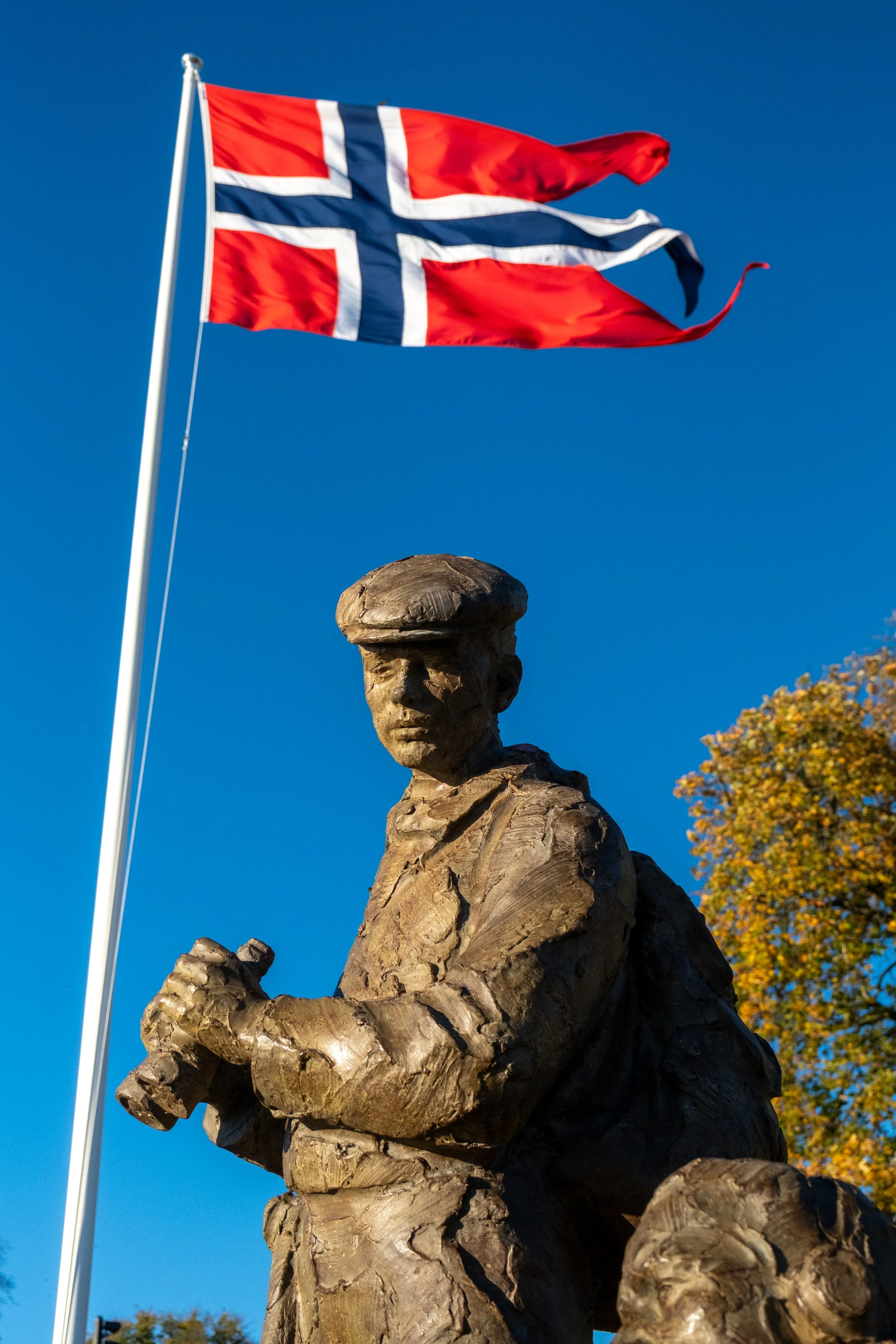
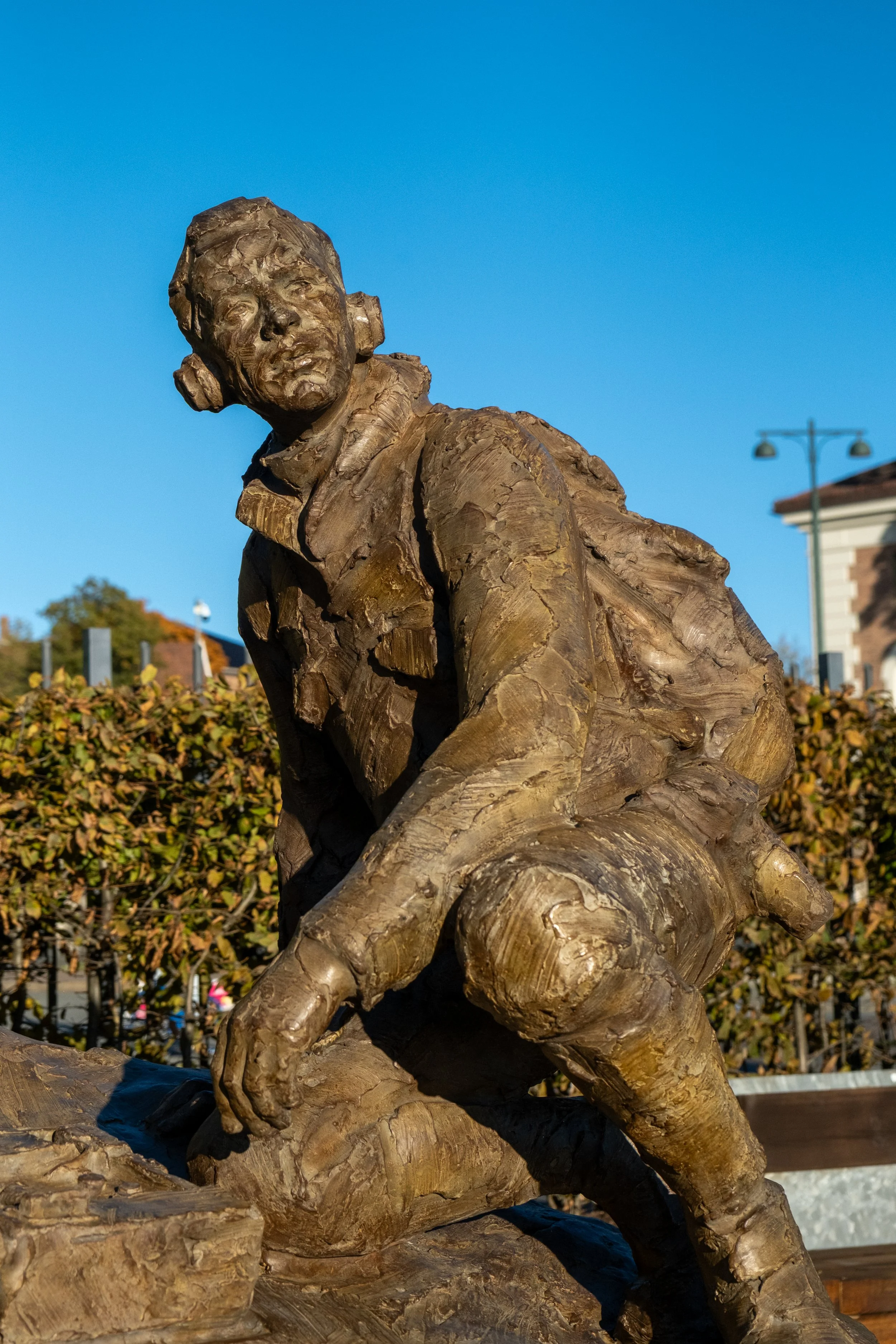
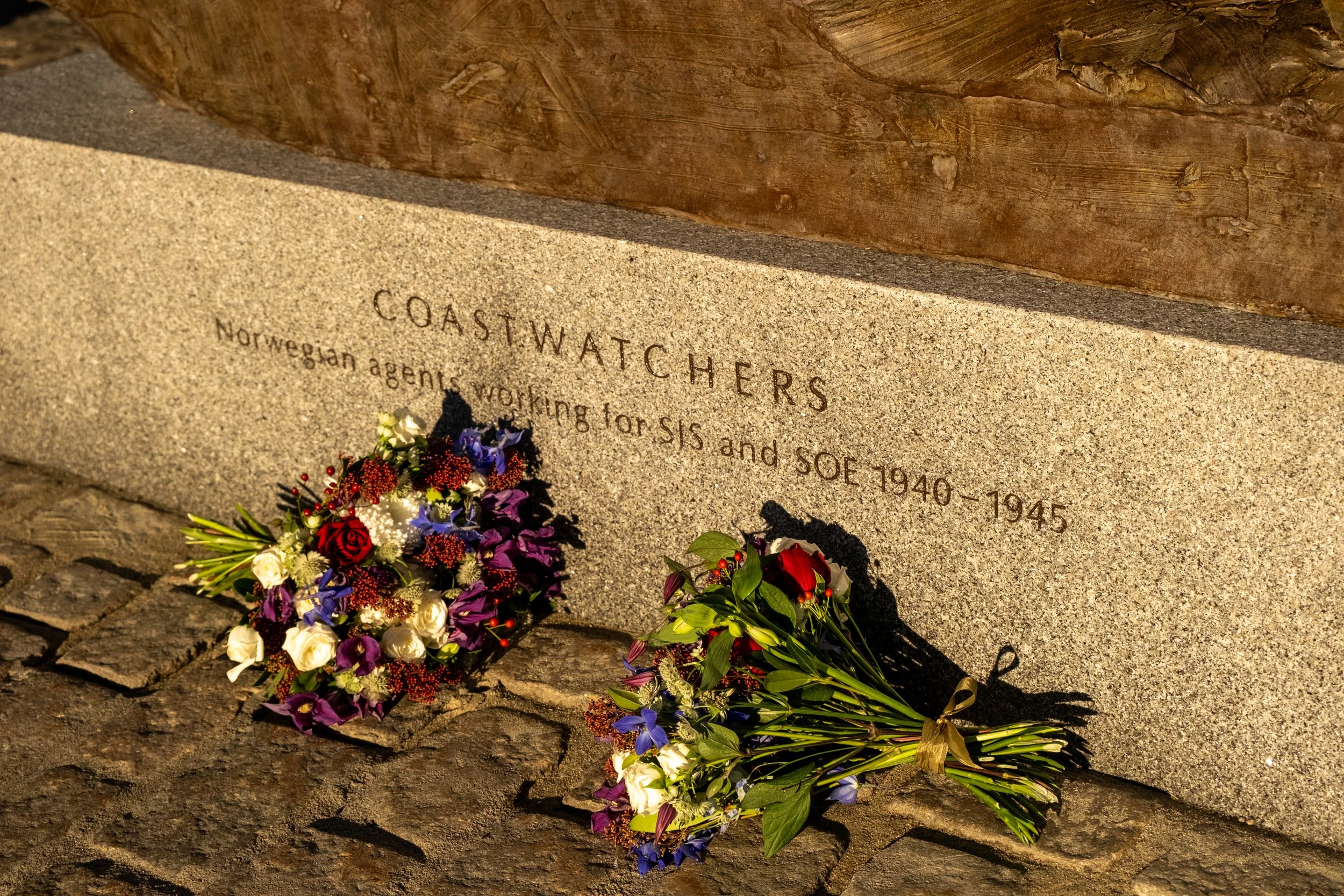
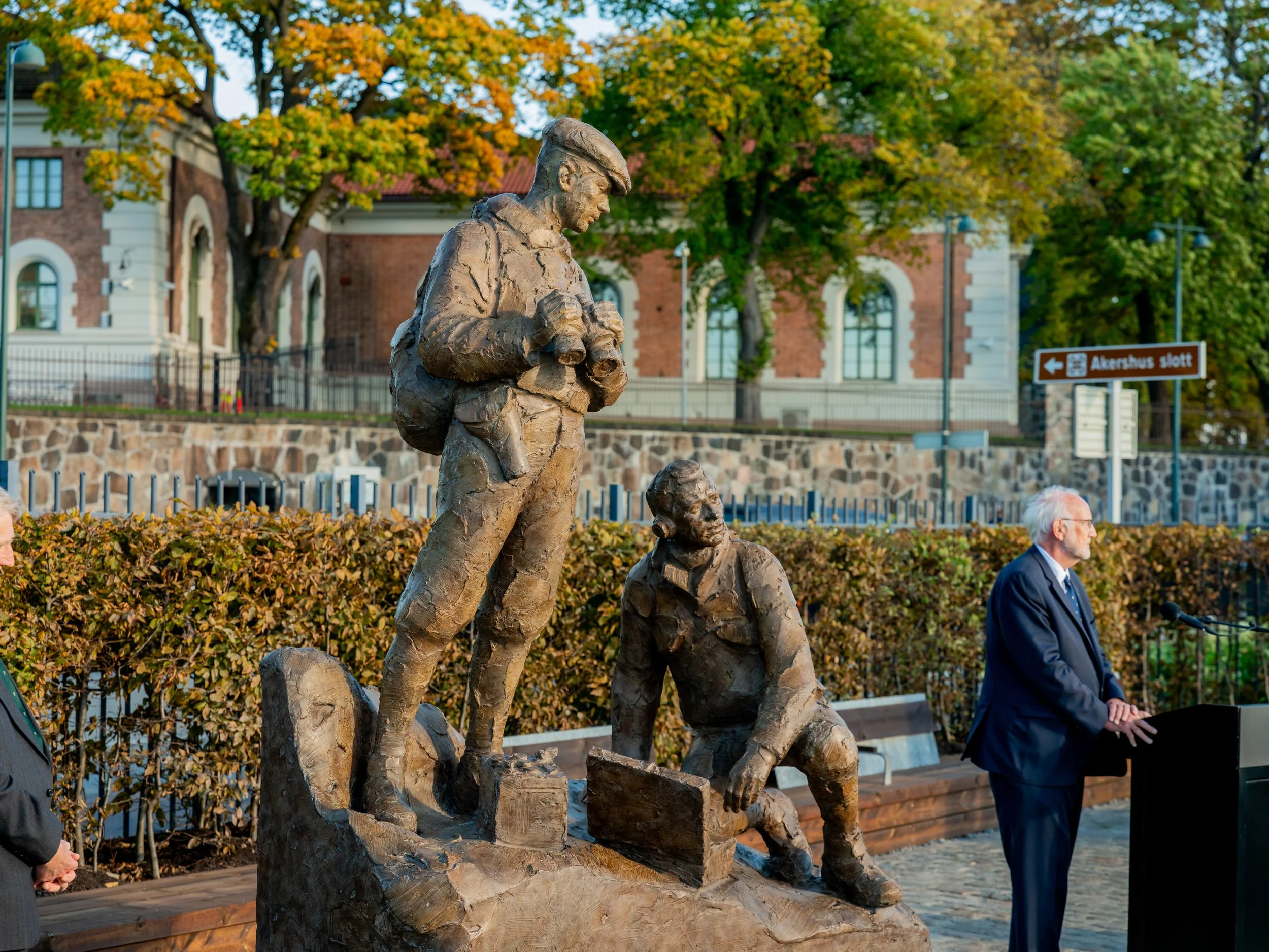
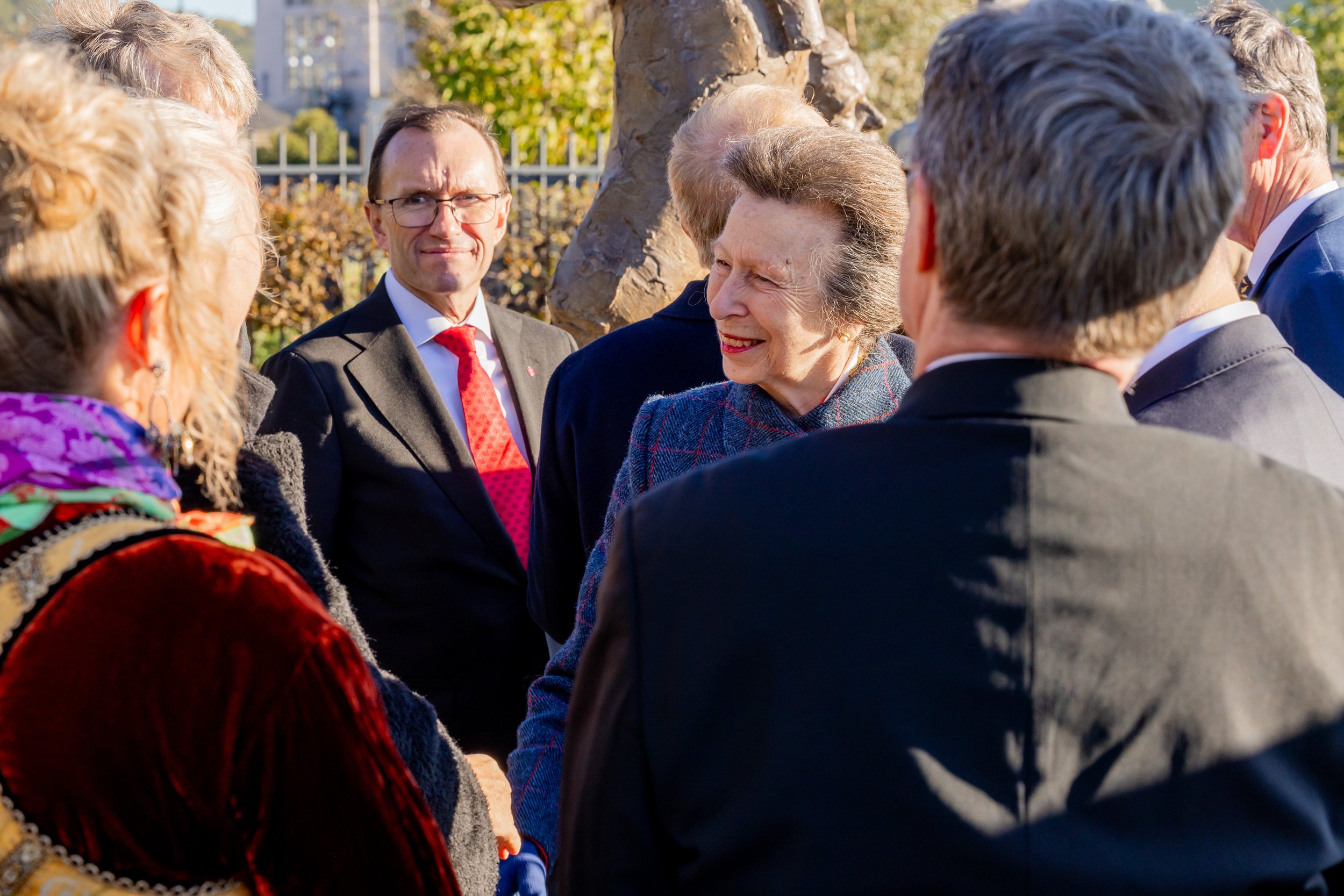
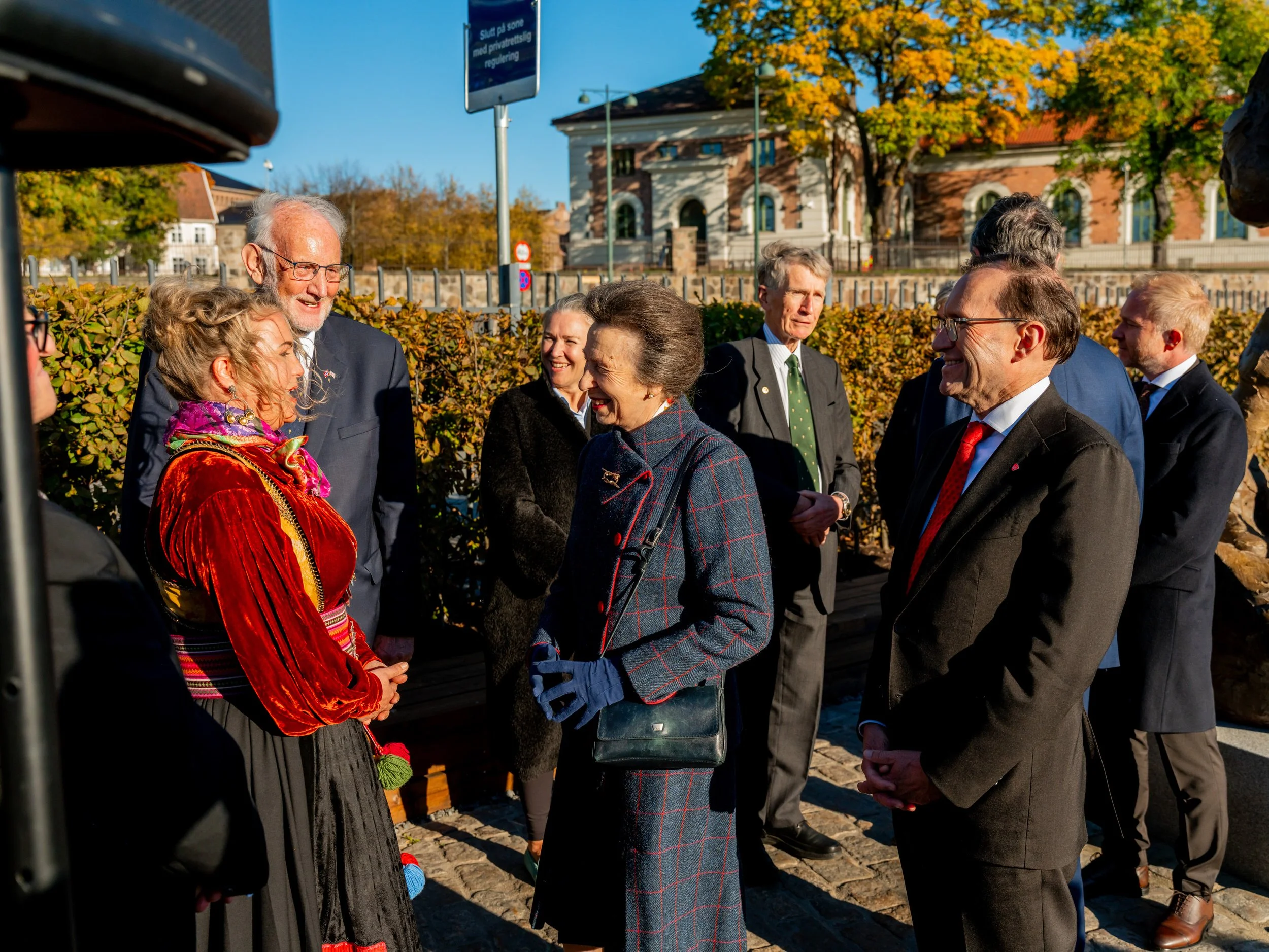
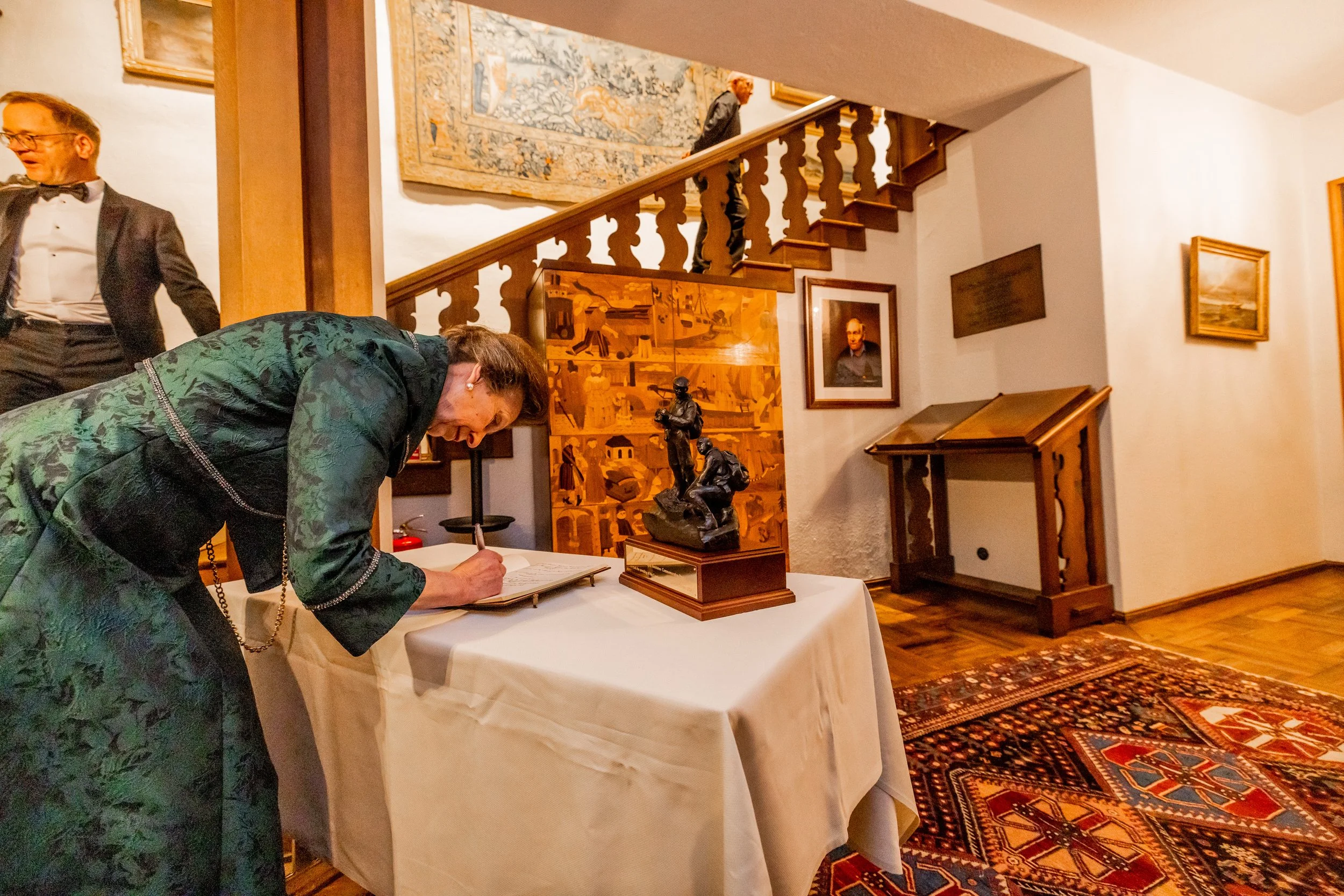
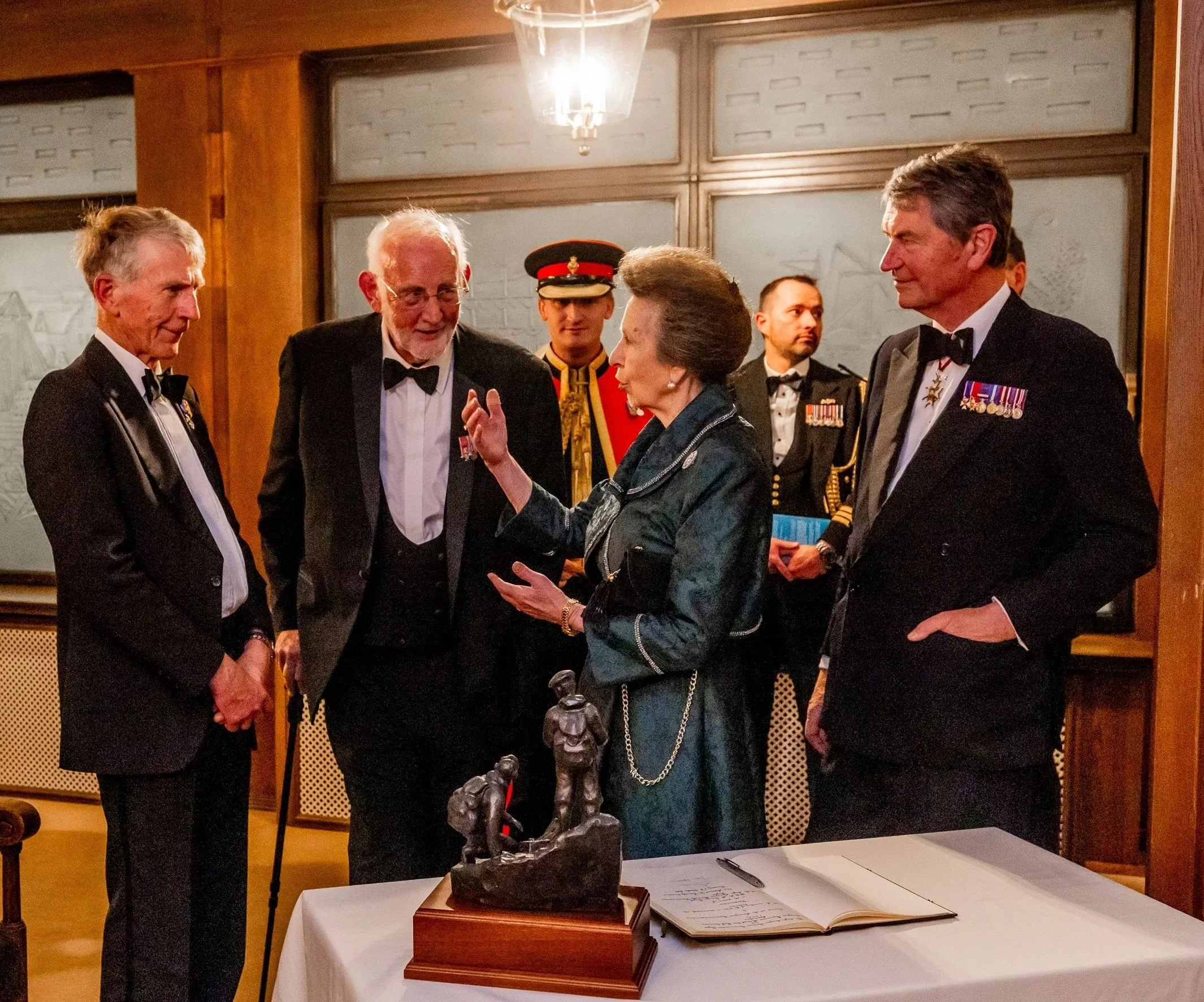
The main purpose of her visit on this occasion was to unveil a memorial statue which the Project had commissioned. This statue, called Coastwatchers, was installed in Normandieplassen in central Oslo. It was designed and created by Håkon Anton Fagerås at his studio in Pietrasanta, in northern Tuscany.
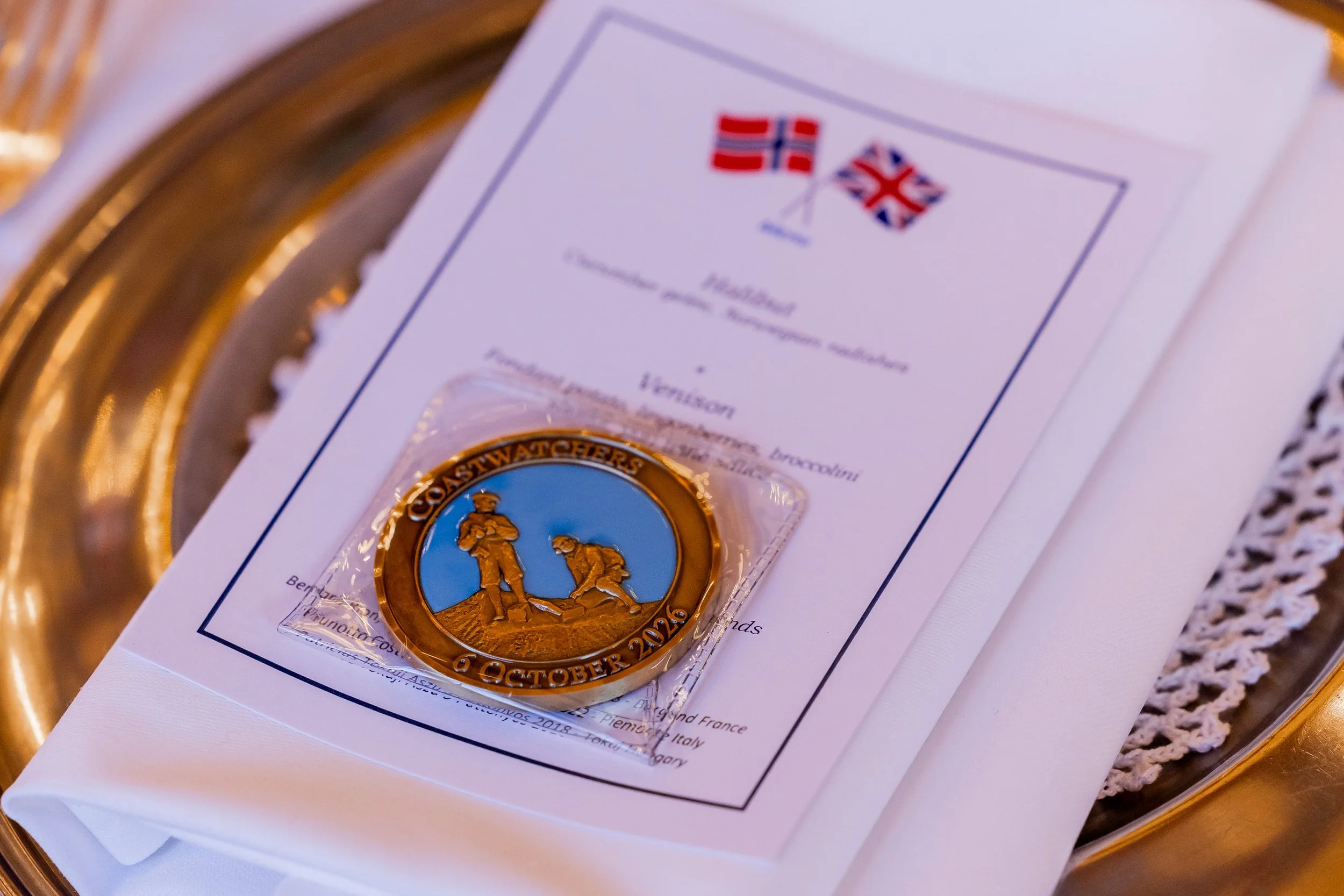
Coastwatchers consists of two figures, who are depicted in a vivid representation, carrying out surveillance or reconnaissance activities.
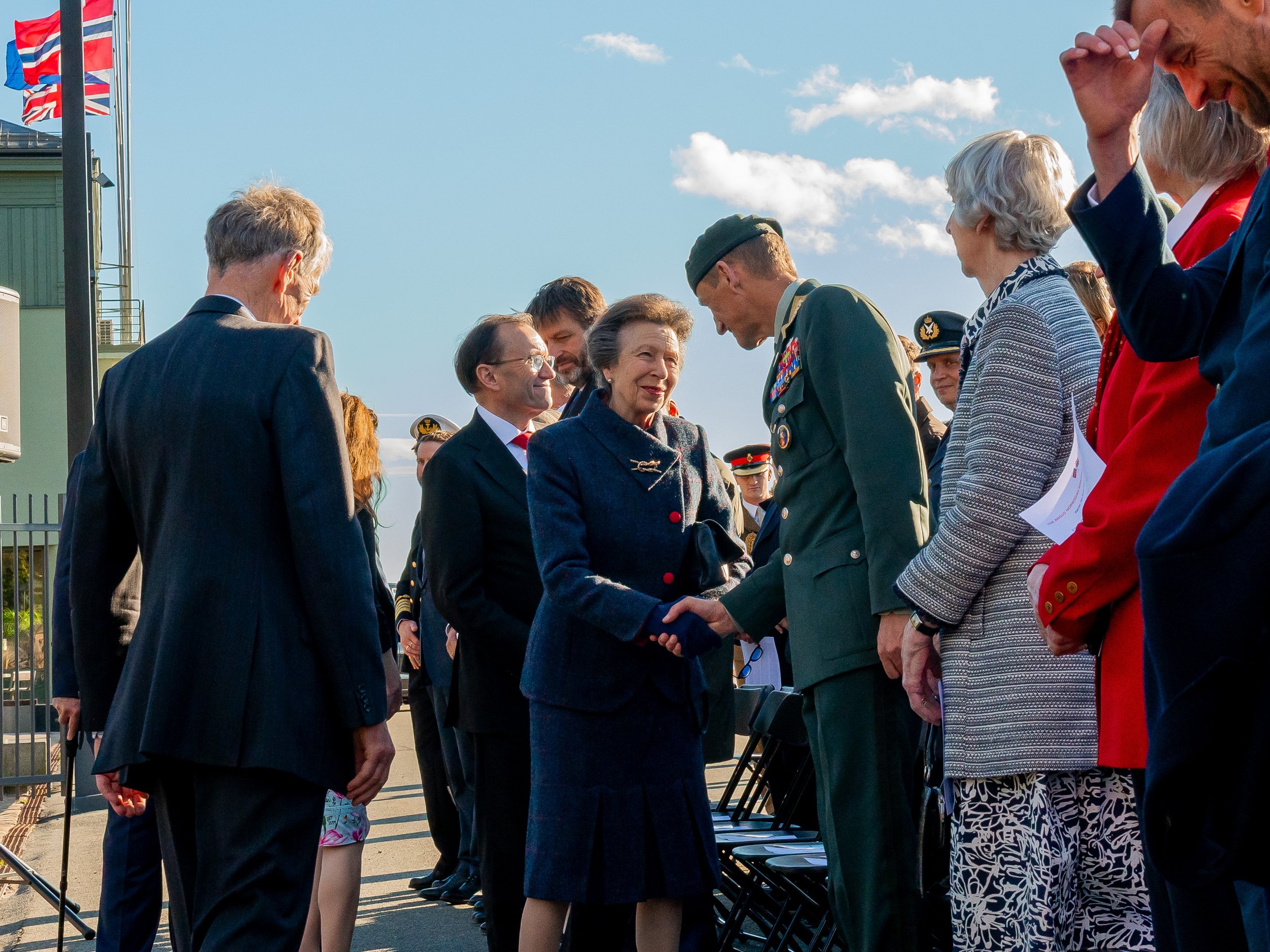
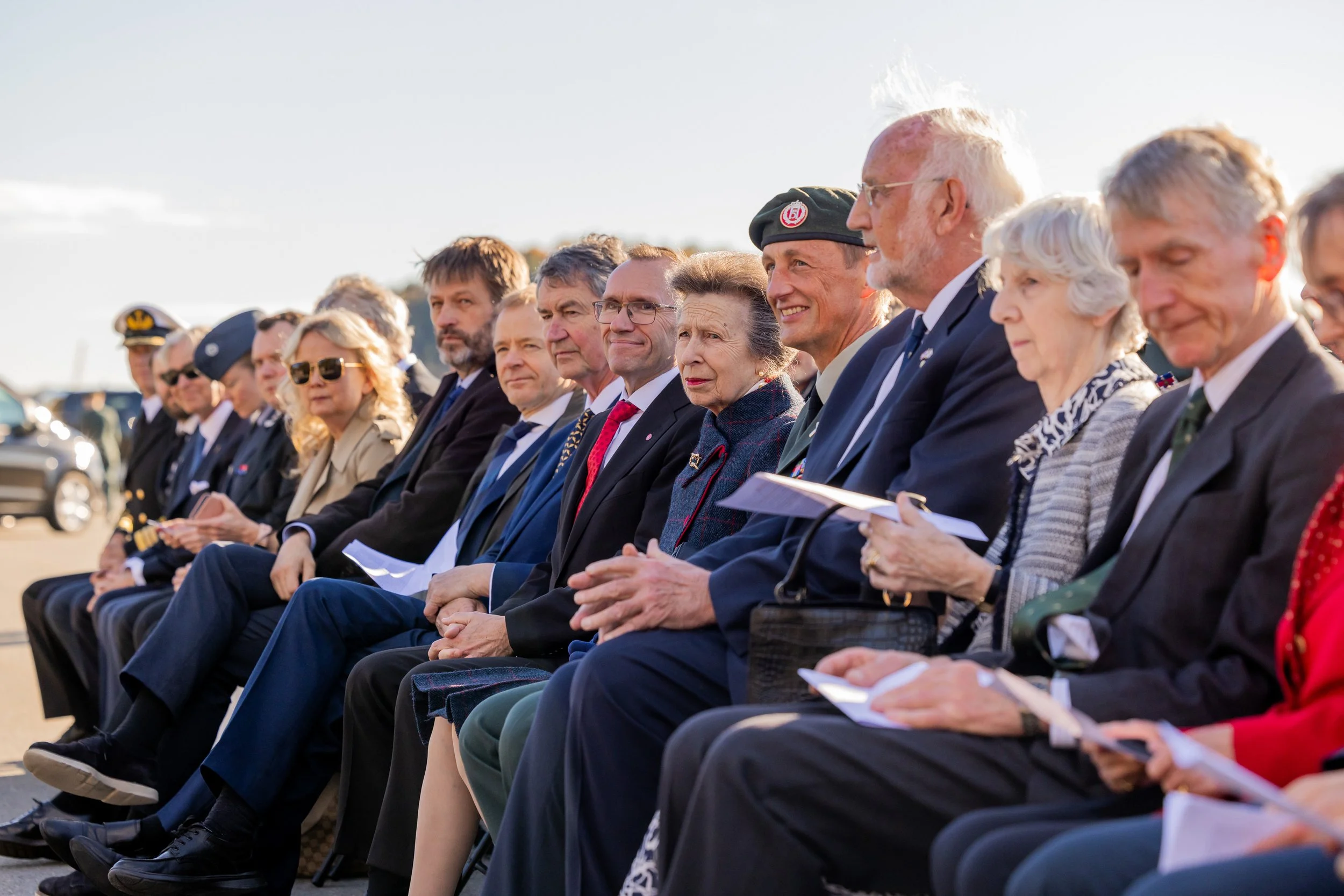
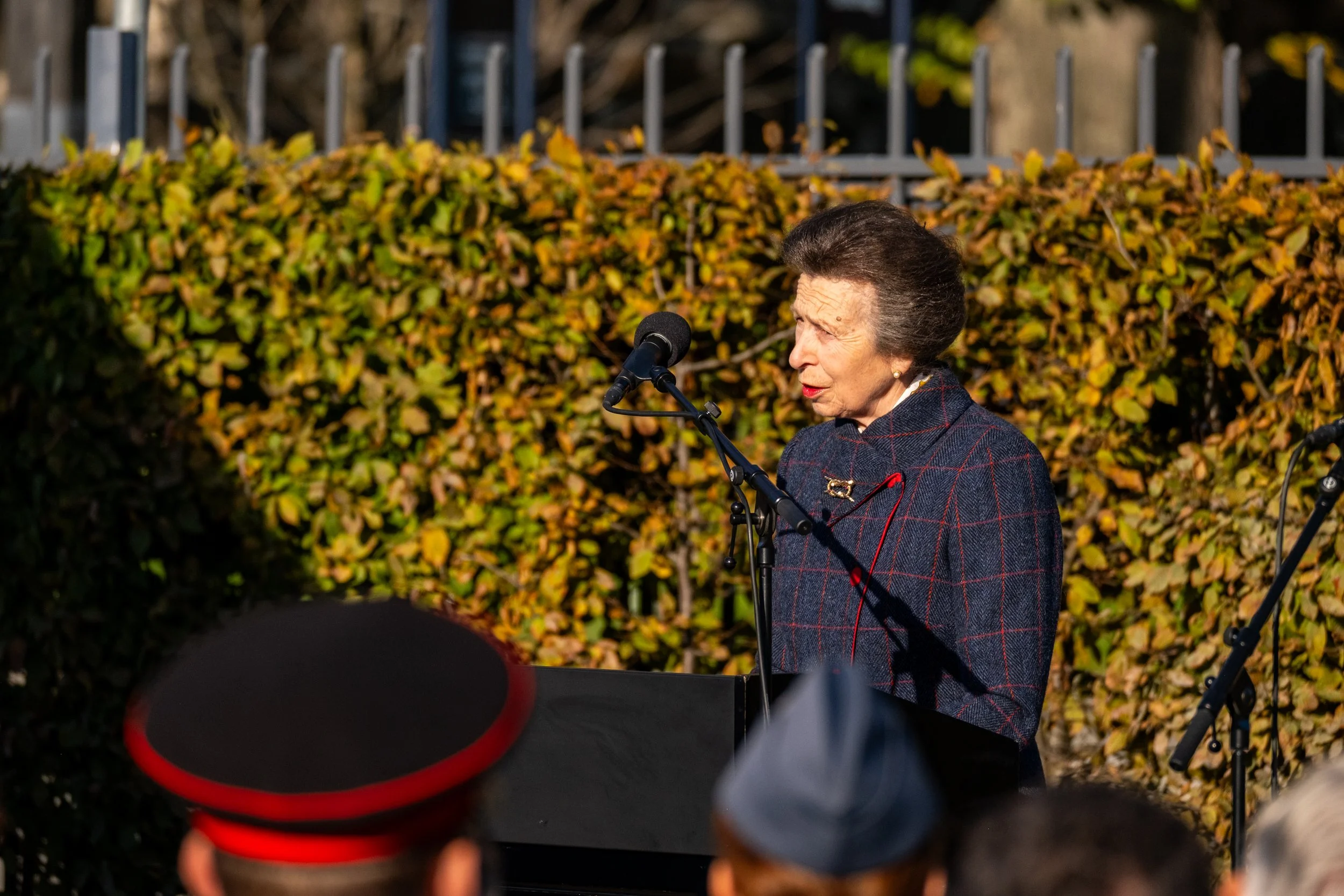
During her speech, HRH The Princess Royal observed that the statue was of historic significance, for several reasons. Most importantly, it is a symbol of the remarkable cooperation which existed between Britain and Norway during the Second World War, as they worked together to undermine the German occupation of this country. It is also the first statue which publicly recognises the work of SIS in any context. And it is the first statue which simultaneously acknowledges the achievements of both SIS and SOE.
And she added: “All should be proud of what this statue represents; it stands as an enduring tribute to those who – at great risk to themselves - fought against tyranny and oppression”.
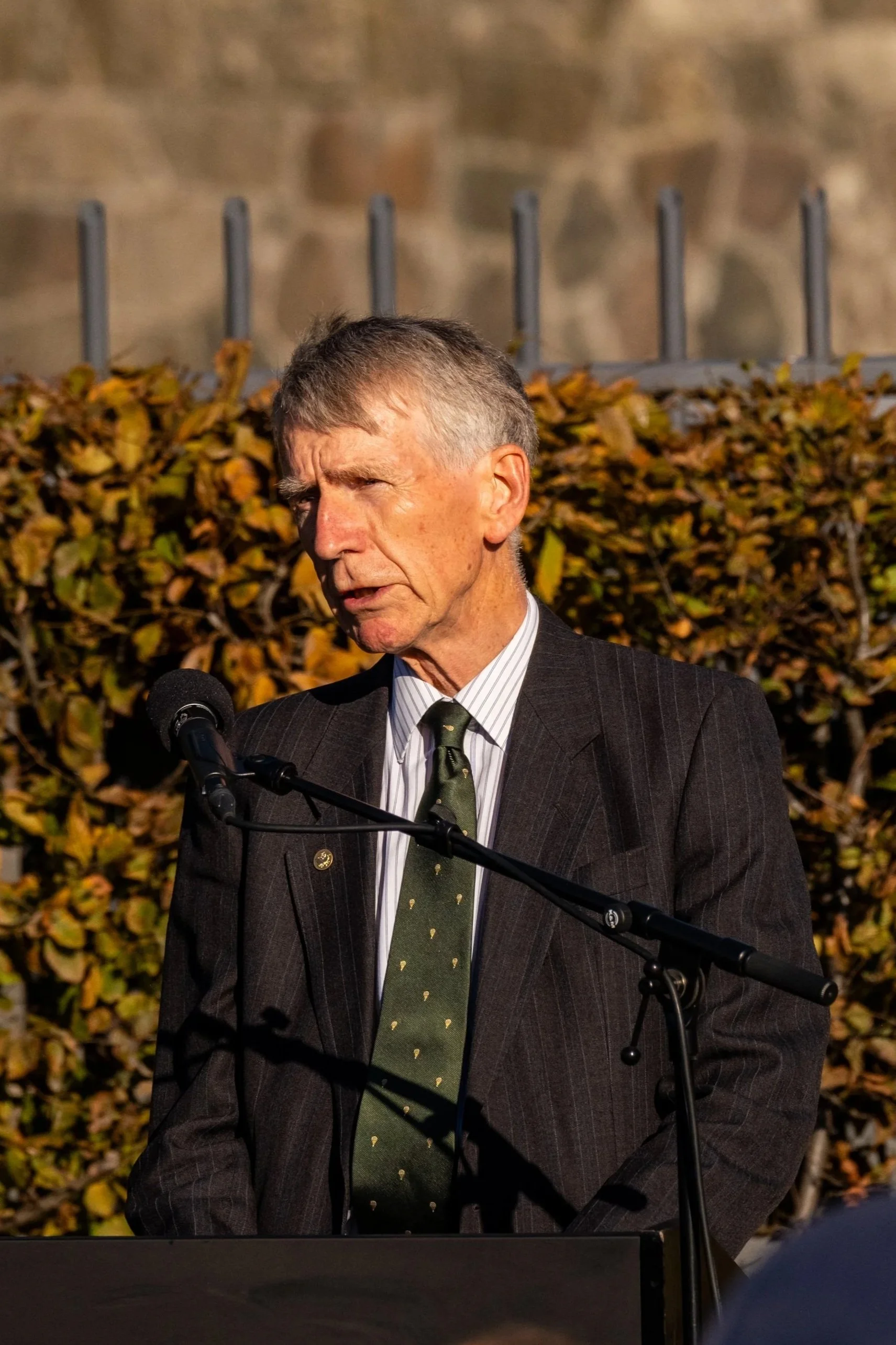
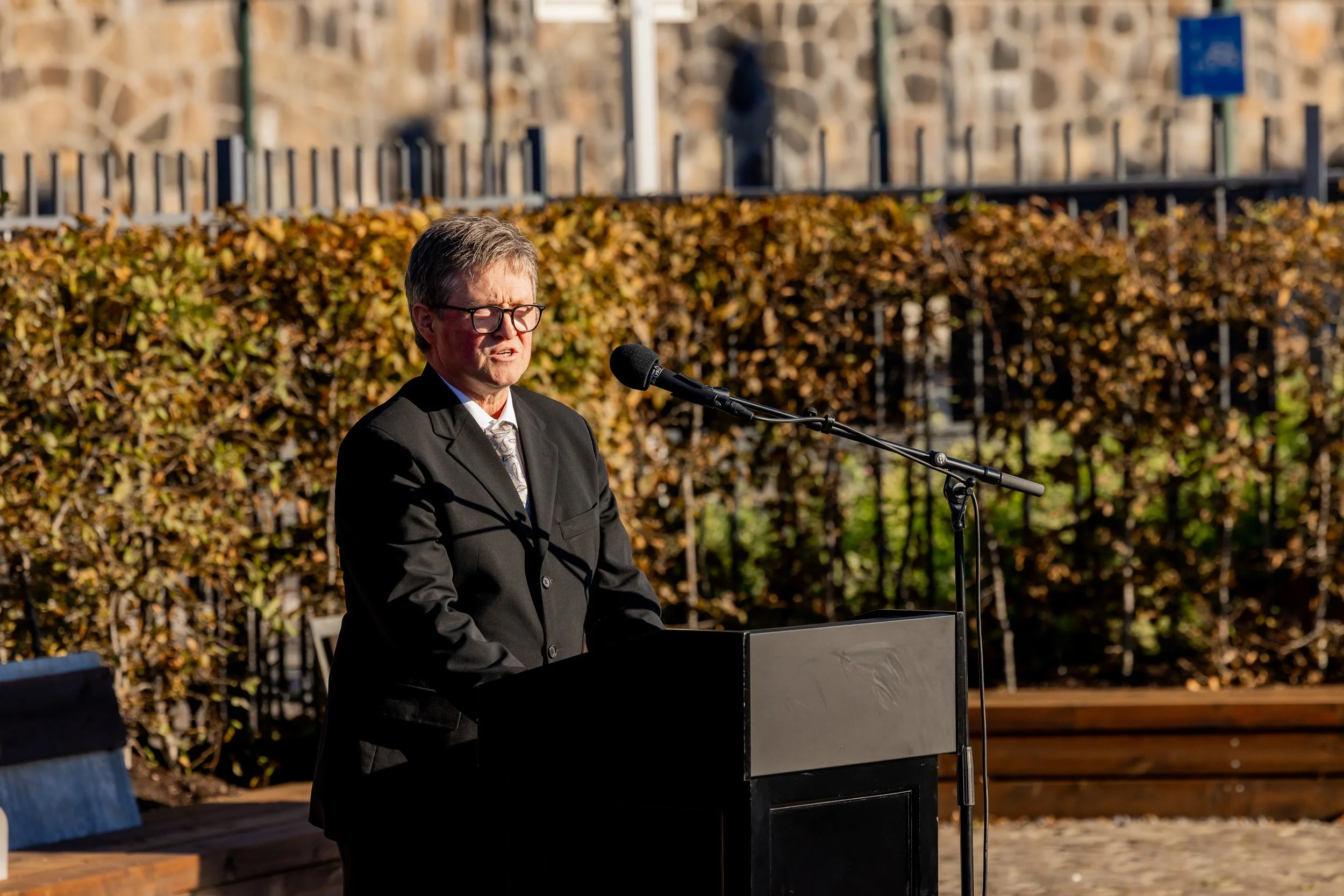
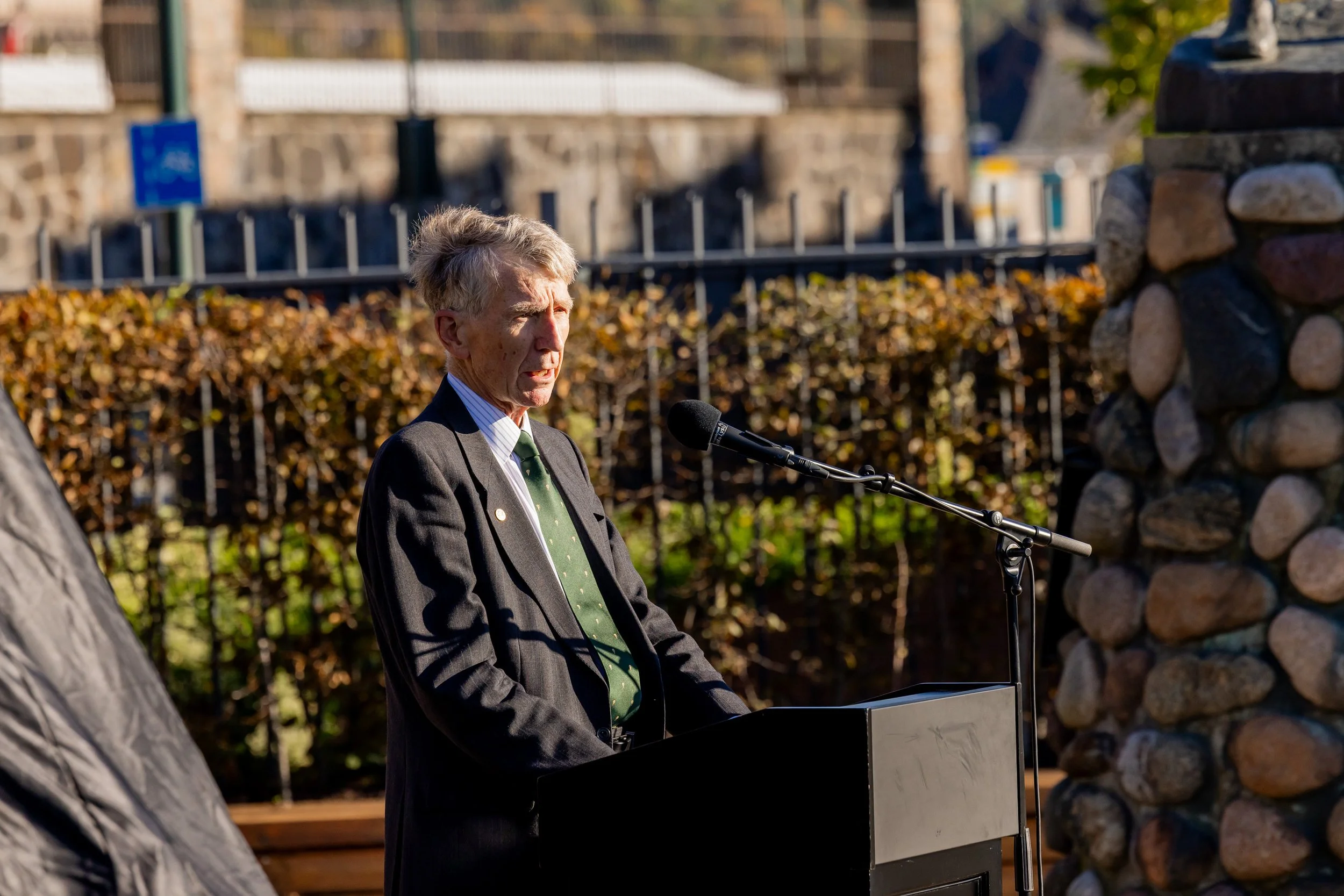
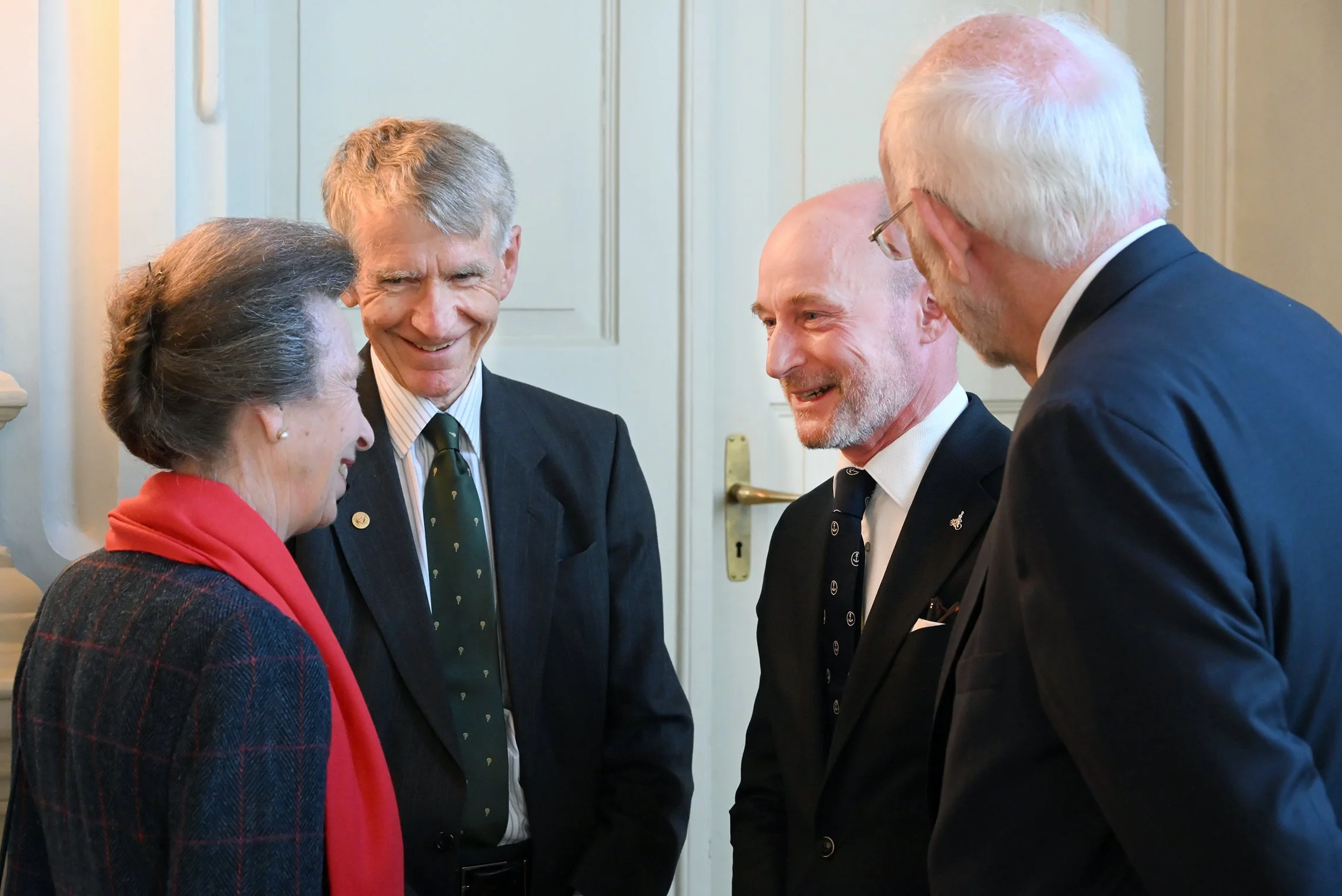
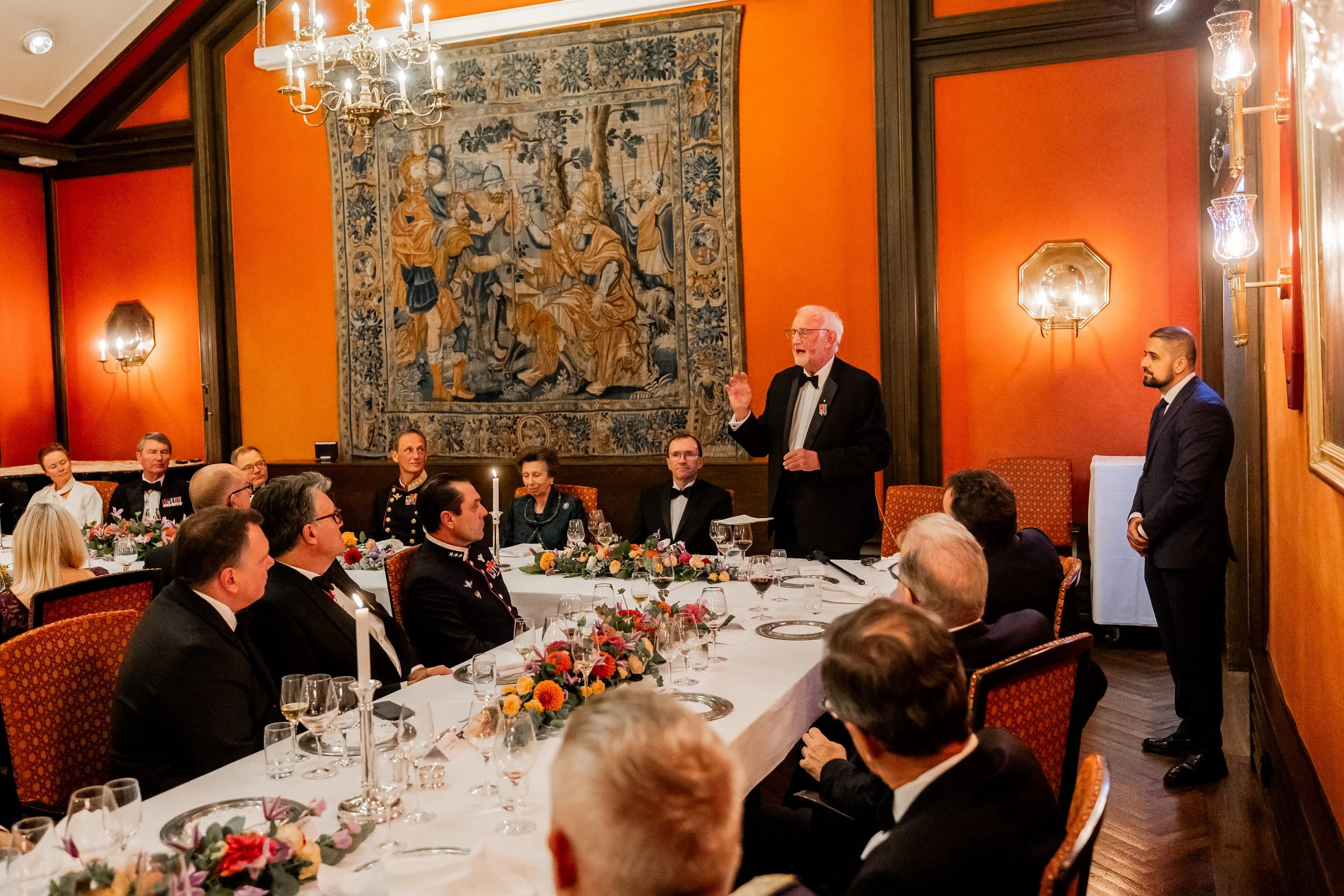
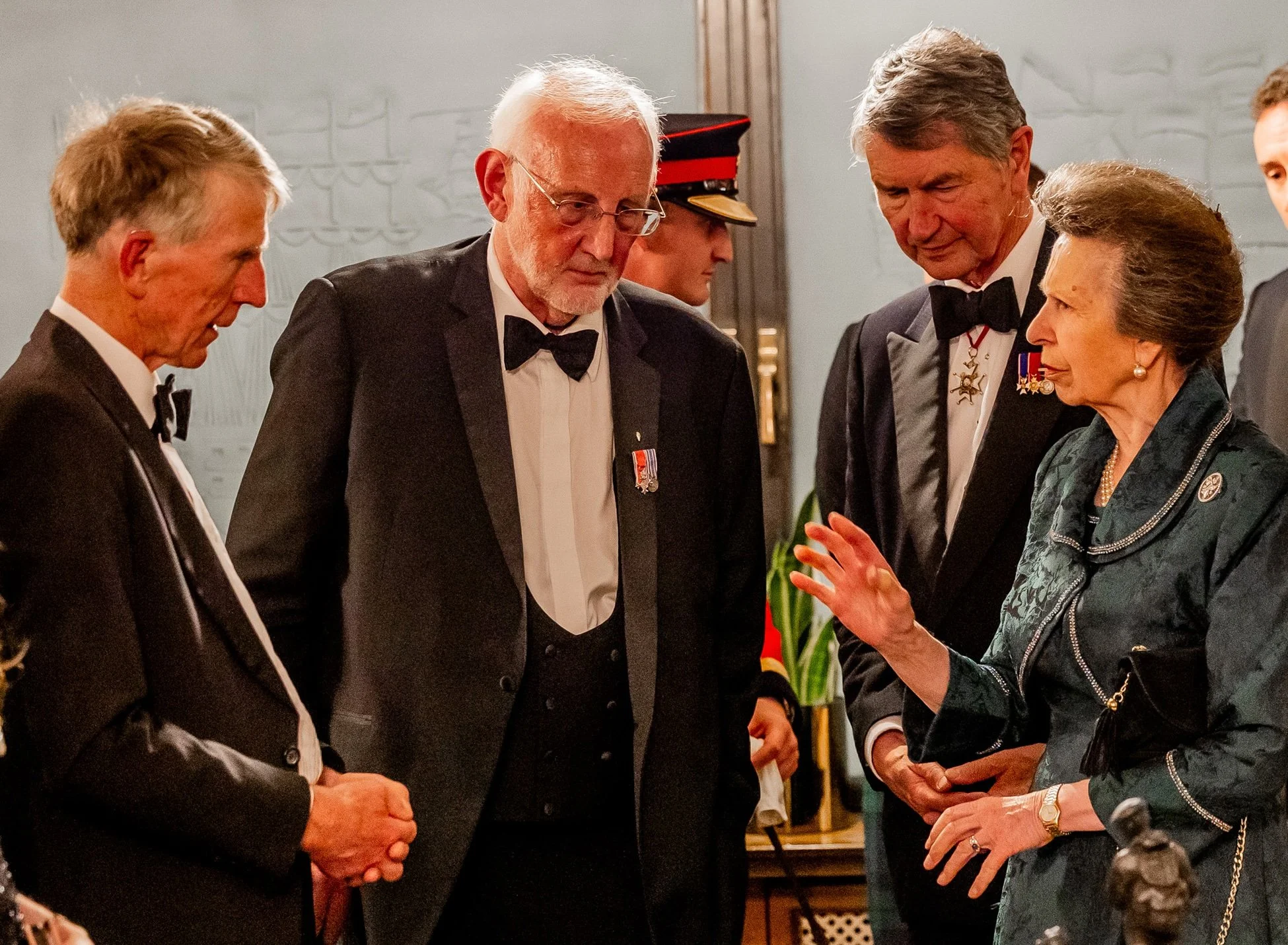
In a speech during the ceremony, Dr Tony Insall made some remarks about the statue project and its background.
On behalf of the Anglo-Norwegian Resistance Commemoration Project, John Andrews and I would like to welcome you here this afternoon for the unveiling of our commemorative statue, Coastwatchers, which pays tribute to those working for the Special Operations Executive and the Secret Intelligence Service in the campaign to free Norway from German occupation.
First, I would like to thank all those who have helped us with this project. We are deeply indebted to you for your generosity. You are too many to mention by name, but I would like to single out DNK, the Norwegian Shipowners Mutual War Risks Insurance Association, and its CEO, Svein Ringbakken, who has been a steadfast friend and supporter over the last two years. DNK have worked continuously to draw attention to the contribution of the Norwegian merchant navy and its sailors to the Allied war effort. And we are equally grateful to the Oslo Port Authority, and to its CEO, Ingvar Mathisen, for their generous agreement that our statue should be installed here in Normandieplassen. There is no other location which could be more appropriate than this.
You might wonder how it can be possible to have a statue which symbolises the work of two such different organisations. After all, SIS preferred to work unnoticed in the shadows and needed peace and quiet to be effective. The sabotage operations of SOE on the other hand, produced quite the opposite effect, and sparked retaliation and disruption. It’s a knotty problem which I wrestled with myself. I concluded that a statue of Coastwatchers could represent both, for it could depict those carrying out either reconnaissance, or surveillance. I produced what I thought was a passable idea, but as you will shortly discover, our very talented sculptor Håkon Anton Fagerås then developed it into something much more imaginative, with visible and intriguing interplay between the two figures. His attention to detail has been remarkable. He even visited a company renting out historical costumes to film making companies, to inspect and even try on some of the clothes worn by people during those wartime years, so he could see how they looked and hung, on models. His work is, as I think you will agree, quite outstanding.
The achievements of the Norwegian resistance – the work of ordinary Norwegians who in unusual circumstances did extraordinary things - have been well documented. But with the passing of time, those achievements, and the spirit which they evoked, are gradually being forgotten. One of our aims in creating this statue is to provide an enduring reminder of them, and what they represent. We are all familiar with the extraordinary feats of men like Gunnar Sønsteby, the leader of the Oslo Gang, and Joachim Rønneberg, who led the Operation Gunnerside team against the heavy water factory at Vemork. But we may not recall others like Atle Svardal, who served with distinction on three different SIS coastwatching hermit stations, living on the coast in generally extremely uncomfortable, dangerous and exposed positions for six months at a time, with just one colleague to share the work. Imagine what tensions would build up if you are living in such close proximity to just one other person, aware of the risk of discovery at any time, and of the need to keep a constant vigilant watch. Before he returned for his third stint, when ordering his supplies, he requested two pairs of boxing gloves. He knew he would argue and have fights with his partner, but if they wore boxing gloves, they would not damage their hands and jeopardise their ability to transmit their reports by morse. What wonderful pragmatism! He died in a German raid in April 1945. Or Peter Deinboll, who worked for SOE and carried out three separate and successful operations against the Okla pyrites mine, south of Trondheim. He was actually spotted by German sentries when carrying out a reconnaissance before the first one, but nonetheless returned the following night to complete his mission. He was decorated for each operation, and remains the only Norwegian to win a DSO twice, and also an MC. He was killed when returning to Norway in November 1944, when his aircraft disappeared without trace. Or Leif Larsen, a skipper on the Shetland Bus who was the most highly decorated allied naval officer of the war - in fact no one has ever won such a wide spectrum of British medals as he did – with a DSM and bar, a CGM, a DSC and a DSO. He made more than 50 trips to occupied Norway, of which perhaps the most outstanding was Operation Title, an attempt to sink the German battleship Tirpitz by towing two underwater vehicles, called chariots, with large warheads, which would be detached by accompanying divers and left under the warship. He bluffed his way through all the German controls, but when almost within sight of his target, the towropes were sheared by a freak wave and the chariots were lost. He scuttled his vessel, and took most of his crew safely overland to Sweden. Sadly, one of them, Able Seaman Robert Evans, was captured and – together with five British commandos captured after Operation Freshman against Vemork – was shot by the Germans on 19 January 1943. They are all buried over there in the Commonwealth War Graves cemetery in Vestre Gravlund.
There are so many more similar stories
At the end of the war, after the celebrations which marked the liberation, many of those who participated in the resistance just quietly put the experience behind them, and went back to their normal jobs. Some of them flourished in other fields. A few could not adjust to the change of their circumstances, and sought work which would continue to bring them excitement and danger. Two such outstandingly brave agents were Knut Haugland, an SOE radio operator who participated in supporting Gunnerside, and Torstein Raaby, who provided much valuable intelligence to SIS about the Tirpitz. They both joined Thor Heydahl’s expedition on the Kon-Tiki, sailing well over four thousand miles across the Pacific from Peru to Polynesia on a balsa wood raft, on a journey which lasted over 100 days. A landmark of 20th century maritime adventure and exploration. As radio operators, they shared the job of keeping contact with the outside world. Haugland later became the first director of the Norwegian resistance museum.
The wartime relationship which had been built up between SIS and its Norwegian counterpart did not end with the liberation of Norway. On the contrary, and particularly after the establishment of NATO, the mutual trust and confidence which had been established provided the basis for strong links which have continued to this day. As Sir Richard Moore, then Chief of SIS, said in a public speech at King’s College London last summer, we continue to share very many common interests and concerns as well as, of course, very closely aligned values. These views were echoed by his Norwegian counterpart, Vice-Admiral Nils Andreas Stensønes, then Director of the Norwegian Intelligence Service, who observed that ‘in the environment in which we now live, and in view of the threats which we face together, the common benefits from our cooperation are now more significant than ever’.
I heard with great sadness of the death in May this year of the last remaining Norwegian resistance veteran, Trond Johansen. I had very much hoped that he would be here today. For many of us he was a legend, not just because of his work in the resistance in the later stages of the war, but also because of the role which he played for decades afterwards in the Norwegian Intelligence Service. With his death, we have lost the last chance to hear at first hand of the experiences of those agents. The repositories of that history are now the families of the veterans, and I am pleased that many of them are able to be here today. They too, have their stories to tell, albeit from a different view point. I thought you would be interested to hear some personal memories of one of them, Are Grønvoll, the son of Marius Grønvold, an agent working for SIS high up in the Arctic Circle, who was primarily responsible for saving the life of an SOE agent, Jan Baalsrud, the only survivor of Operation Martin. He will talk about how much - or how little – he spoke of his activities, and of some of the difficulties which he faced in ensuring that Baalsrud, in the most extreme of circumstances, was eventually able to reach safety in Sweden.
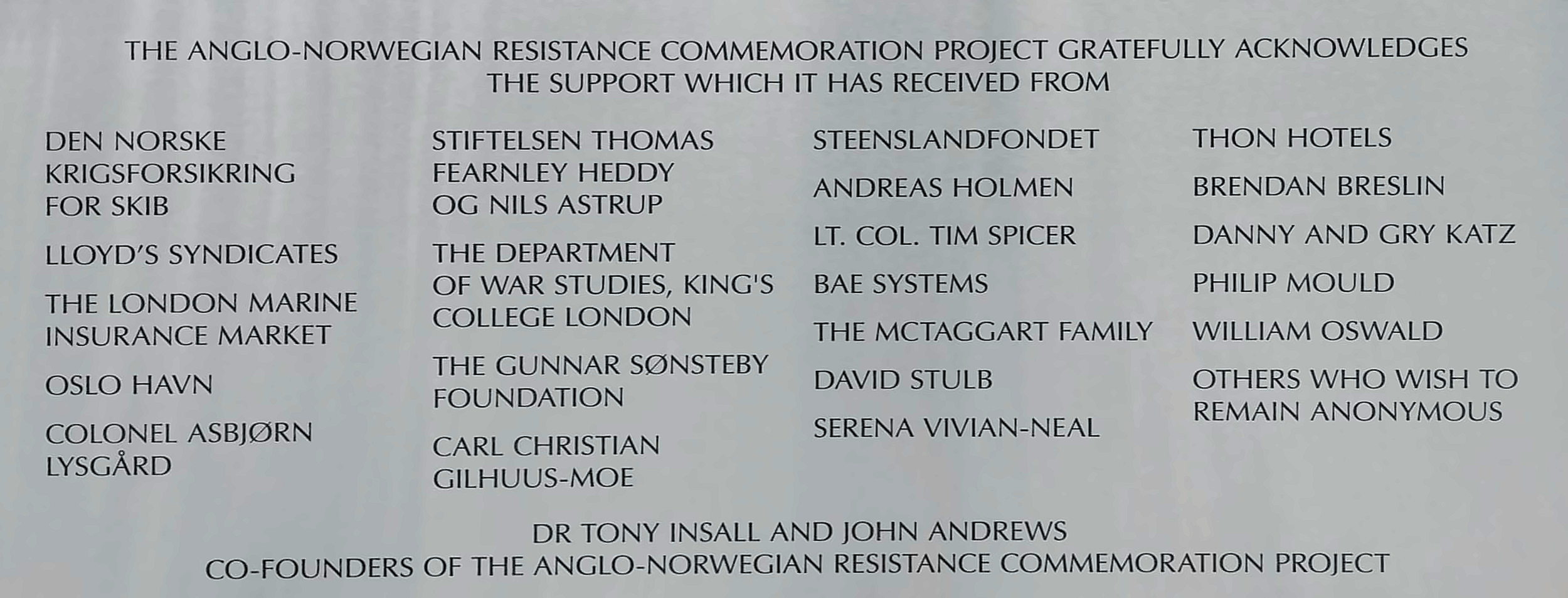
The Statue, the superb location and the visits in 2024 and 2026 by Her Royal Highness The Princess Royal, our Patron, were made possible by the combined efforts of many individuals and organisations. Some of these are listed at the rear of the statue, but others wish to remain anonymous. We are grateful to all those who contributed in various ways to this wonderful memorial to very brave Norwegians.
Photography by Espen Sturlason, Erling Eikli & His Kristian Riise/Oslo Port